Safety note: Admin approval is an initial review, not a guarantee that every detail is correct. Check important or urgent claims with official sources and report anything inaccurate or unsafe.
Source and credit: Contributor's own report
Historic Maclean Fishing Co-op Outlet to Be Sold Amid White Spot Disease Impact - Maclean, NSW
Smart summary
After operating for more than 75 years, the Clarence River Fishermen's Co-Operative will auction its Maclean seafood outlet as ongoing white spot disease restrictions continue to affect the region's fishing industry.
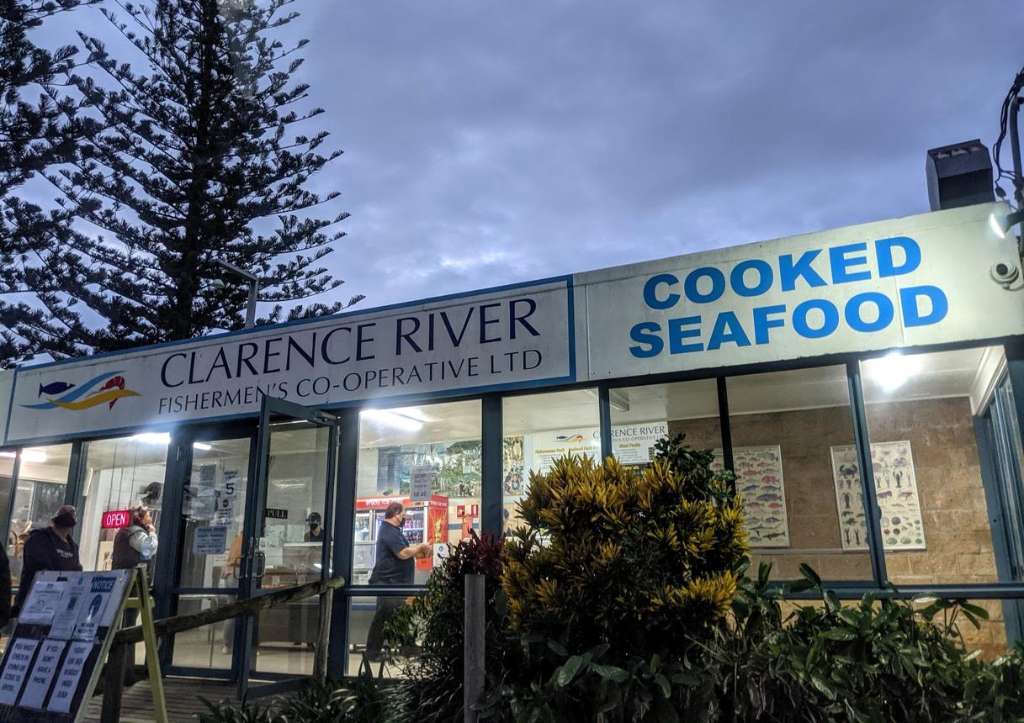
A landmark seafood outlet in Maclean, New South Wales, is set to be sold after decades of serving local residents and visitors, marking a significant moment for the Clarence River fishing industry. The Clarence River Fishermen's Co-Operative has announced it will auction its Maclean premises in August after nearly 80 years of operation, citing the long-term financial impact of white spot disease restrictions.
The Maclean outlet has operated since 1949 and has become one of the best-known seafood retail locations on the NSW North Coast. The co-operative is recognised as the state's largest supplier of fresh wild-caught prawns, with local fishermen relying on the business to process and market their catches.
The decision to sell follows the outbreak of white spot disease, first detected in the Clarence River in 2023. White spot disease is a highly contagious viral disease that affects prawns and other crustaceans. While it poses no risk to human health, it can cause extremely high mortality in prawns, leading authorities to introduce strict biosecurity controls to prevent its spread.
As part of those controls, uncooked prawns and certain crustaceans cannot be moved outside the Clarence River Control Zone. These restrictions have had a major impact on commercial fishing businesses, particularly the region's green school prawn industry, which previously generated around 40 per cent of the co-operative's annual income.
Clarence River Fishermen's Co-Operative chair Garry Anderson said the financial consequences have been severe, with the organisation losing about $2.5 million each year since the disease was detected. He said many shareholder-fishers had accepted government buyout packages, reducing the fleet and making it increasingly difficult for the co-operative to continue operating from multiple locations.
Once the Maclean outlet is sold, the co-operative will continue operating from its Iluka facility. While this ensures the business remains active, local commercial fishers say it will increase travel times and create additional challenges when delivering fresh seafood, particularly live catches such as mud crabs.
The New South Wales Government introduced a $4.5 million transition package in late 2025 to support fishers affected by the white spot disease outbreak. The package includes voluntary fishing licence buybacks and financial assistance for businesses adapting to the ongoing restrictions. Government officials say they remain committed to supporting the commercial fishing industry while maintaining biosecurity measures.
Local fishing representatives believe the closure of the Maclean outlet represents the end of an important chapter in the region's maritime history. The co-operative has long been an economic and cultural hub for the Clarence River community, supporting generations of commercial fishers and supplying fresh seafood across New South Wales.
Although the sale marks the end of operations at the historic Maclean site, the co-operative says it intends to rebuild from Iluka and continue supporting the remaining fishing fleet. Industry leaders hope future recovery efforts and continued government support will help restore confidence in the Clarence River seafood sector.
Co-OperativeClarenceDiseaseFishingMaclean
A landmark seafood outlet in Maclean, New South Wales, is set to be sold after decades of serving local residents and visitors, marking a significant moment for the Clarence River fishing industry. The Clarence River Fishermen's Co-Operative has announced it will auction its Maclean premises in August after nearly 80 years of operation, citing the long-term financial impact of white spot disease restrictions.
The Maclean outlet has operated since 1949 and has become one of the best-known seafood retail locations on the NSW North Coast. The co-operative is recognised as the state's largest supplier of fresh wild-caught prawns, with local fishermen relying on the business to process and market their catches.
The decision to sell follows the outbreak of white spot disease, first detected in the Clarence River in 2023. White spot disease is a highly contagious viral disease that affects prawns and other crustaceans. While it poses no risk to human health, it can cause extremely high mortality in prawns, leading authorities to introduce strict biosecurity controls to prevent its spread.
As part of those controls, uncooked prawns and certain crustaceans cannot be moved outside the Clarence River Control Zone. These restrictions have had a major impact on commercial fishing businesses, particularly the region's green school prawn industry, which previously generated around 40 per cent of the co-operative's annual income.
Clarence River Fishermen's Co-Operative chair Garry Anderson said the financial consequences have been severe, with the organisation losing about $2.5 million each year since the disease was detected. He said many shareholder-fishers had accepted government buyout packages, reducing the fleet and making it increasingly difficult for the co-operative to continue operating from multiple locations.
Once the Maclean outlet is sold, the co-operative will continue operating from its Iluka facility. While this ensures the business remains active, local commercial fishers say it will increase travel times and create additional challenges when delivering fresh seafood, particularly live catches such as mud crabs.
The New South Wales Government introduced a $4.5 million transition package in late 2025 to support fishers affected by the white spot disease outbreak. The package includes voluntary fishing licence buybacks and financial assistance for businesses adapting to the ongoing restrictions. Government officials say they remain committed to supporting the commercial fishing industry while maintaining biosecurity measures.
Local fishing representatives believe the closure of the Maclean outlet represents the end of an important chapter in the region's maritime history. The co-operative has long been an economic and cultural hub for the Clarence River community, supporting generations of commercial fishers and supplying fresh seafood across New South Wales.
Although the sale marks the end of operations at the historic Maclean site, the co-operative says it intends to rebuild from Iluka and continue supporting the remaining fishing fleet. Industry leaders hope future recovery efforts and continued government support will help restore confidence in the Clarence River seafood sector.
Australian property values have fallen for seven consecutive months, with the national median home value dropping approximately $63,400 since March as h...
Around 8,000 customers in Western Australia's coastal city of Albany will need to replace gas appliances with electric alternatives or switch to bottled...
Buyers from Sydney and Melbourne are purchasing homes in Alice Springs at a rapid pace, attracted by strong rental returns and limited housing availabil...
Growing awareness of Auslan is highlighting the importance of teaching children sign language and helping them communicate with people who are deaf or h...
Police are investigating after a one-year-old child died following a house fire in Collie, while several other people inside the property escaped safely.
A fisherman escaped unharmed after a large crocodile climbed onto his boat while he was fishing alone on the Mary River, prompting renewed safety warnin...
A filmmaker from Bourke in western New South Wales has taken over leadership of an Indigenous film festival in Paris, creating an opportunity to bring A...
Concerns are growing over the reliability and availability of Australia's public electric vehicle charging network, with thousands of charging points po...
Police are investigating after a one-year-old child died following a house fire in Collie, while several other people inside the property escaped safely.
A psychiatric report presented to South Australia's Supreme Court has raised questions about Tamika Chesser's mental competence in the case involving th...
A freedom of information request has revealed that Gold Coast Council does not hold a copy of the invoice for Mayor Tom Tate's three-day stay at Donald...