Safety note: Admin approval is an initial review, not a guarantee that every detail is correct. Check important or urgent claims with official sources and report anything inaccurate or unsafe.
Source and credit: Contributor's own report
Medical students excluded from Commonwealth Prac Payment despite thousands of unpaid placement hours - Armidale, NSW
Smart summary
Australian medical students and health advocates have criticised the federal government’s decision to expand paid placement support to other health courses while leaving medical students without financial assistance
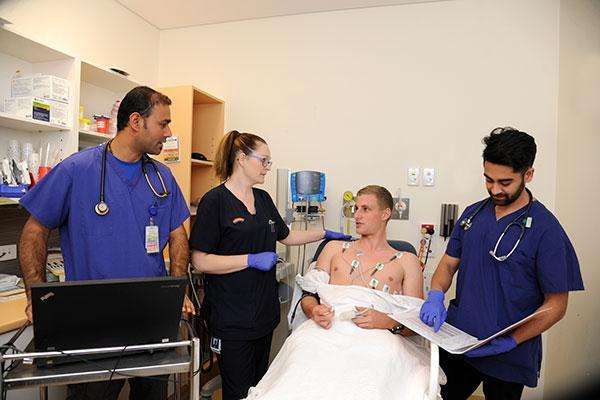
Medical students across Australia have raised concerns after being excluded from the expanded Commonwealth Prac Payment program, despite completing thousands of hours of compulsory unpaid clinical placements as part of their training.
The federal government recently announced an expansion of the Commonwealth Prac Payment, extending financial support to students studying additional allied health professions. The program will provide eligible students with up to $338.60 per week during mandatory placement periods, but medical students will not be included in the expansion.
The decision has drawn criticism from medical student organisations and healthcare advocates, who argue that medical degrees involve some of the longest and most demanding placement requirements in the education system. Many medical students complete between 2,000 and 4,000 hours of clinical training, often while reducing their ability to work paid jobs.
Robert Davies, a University of New England medical student who moved from Sydney to Armidale to study medicine, said balancing study, placement commitments and living costs was becoming increasingly difficult. With long weekly placement schedules, many students struggle to maintain employment while meeting course requirements.
The Australian Medical Students’ Association said excluding medical students could create barriers for people from lower-income backgrounds who want to become doctors. The organisation warned that financial pressure may discourage talented students from pursuing medicine, particularly those who cannot rely on family support.
Healthcare groups have also highlighted the impact on regional and rural communities. The Australian Medical Association said financial support for medical students could help encourage more people to complete rural placements and eventually work in areas experiencing doctor shortages.
The government has defended the decision, saying the expansion is targeted at professions where there are significant workforce shortages. Prime Minister Anthony Albanese said medical degrees already attract many applicants, while the new funding was focused on areas needing more workers.
From July 2027, the expanded Commonwealth Prac Payment will support eligible students studying ten additional frontline health disciplines, including physiotherapy, clinical psychology, occupational therapy, speech pathology, paramedicine, radiography, pharmacy, rehabilitation therapies, audiology and podiatry.
The payment currently supports eligible teaching, nursing, midwifery and social work students during mandatory placements. The government says the program is designed to reduce financial pressure and help students complete training needed for Australia’s future workforce.
However, medical students argue that their exclusion sends a message that their training is less financially challenging despite the significant time commitment required. Many students undertaking rural placements also face additional expenses such as accommodation, travel, fuel and food costs while away from home.
The debate comes as Australia continues to address healthcare workforce shortages, particularly in regional and remote communities. Medical organisations say supporting students during training could be an important step in improving future access to doctors.
Advocates have called on the federal government to reconsider the decision and include medical students in future expansions of the Commonwealth Prac Payment scheme.
StudentsMedicalPaymentCommonwealthPlacement
Medical students across Australia have raised concerns after being excluded from the expanded Commonwealth Prac Payment program, despite completing thousands of hours of compulsory unpaid clinical placements as part of their training.
The federal government recently announced an expansion of the Commonwealth Prac Payment, extending financial support to students studying additional allied health professions. The program will provide eligible students with up to $338.60 per week during mandatory placement periods, but medical students will not be included in the expansion.
The decision has drawn criticism from medical student organisations and healthcare advocates, who argue that medical degrees involve some of the longest and most demanding placement requirements in the education system. Many medical students complete between 2,000 and 4,000 hours of clinical training, often while reducing their ability to work paid jobs.
Robert Davies, a University of New England medical student who moved from Sydney to Armidale to study medicine, said balancing study, placement commitments and living costs was becoming increasingly difficult. With long weekly placement schedules, many students struggle to maintain employment while meeting course requirements.
The Australian Medical Students’ Association said excluding medical students could create barriers for people from lower-income backgrounds who want to become doctors. The organisation warned that financial pressure may discourage talented students from pursuing medicine, particularly those who cannot rely on family support.
Healthcare groups have also highlighted the impact on regional and rural communities. The Australian Medical Association said financial support for medical students could help encourage more people to complete rural placements and eventually work in areas experiencing doctor shortages.
The government has defended the decision, saying the expansion is targeted at professions where there are significant workforce shortages. Prime Minister Anthony Albanese said medical degrees already attract many applicants, while the new funding was focused on areas needing more workers.
From July 2027, the expanded Commonwealth Prac Payment will support eligible students studying ten additional frontline health disciplines, including physiotherapy, clinical psychology, occupational therapy, speech pathology, paramedicine, radiography, pharmacy, rehabilitation therapies, audiology and podiatry.
The payment currently supports eligible teaching, nursing, midwifery and social work students during mandatory placements. The government says the program is designed to reduce financial pressure and help students complete training needed for Australia’s future workforce.
However, medical students argue that their exclusion sends a message that their training is less financially challenging despite the significant time commitment required. Many students undertaking rural placements also face additional expenses such as accommodation, travel, fuel and food costs while away from home.
The debate comes as Australia continues to address healthcare workforce shortages, particularly in regional and remote communities. Medical organisations say supporting students during training could be an important step in improving future access to doctors.
Advocates have called on the federal government to reconsider the decision and include medical students in future expansions of the Commonwealth Prac Payment scheme.
New funding from local charity Wishlist is improving communication support for patients at Bundaberg Hospital, with resources designed to help people communicate more effectivel...
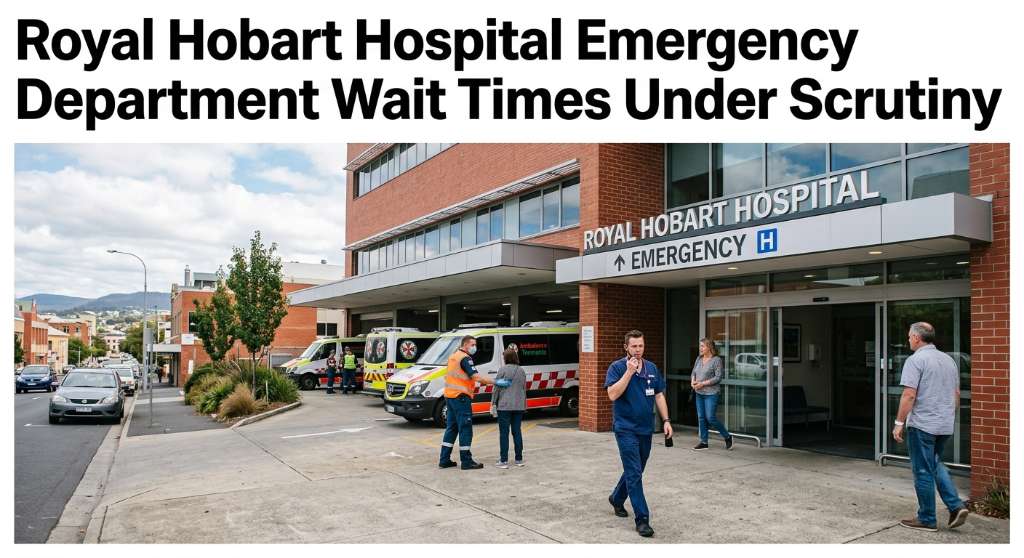
New figures have renewed concerns about emergency department delays at Royal Hobart Hospital, with the health system facing questions over patient waiti...
Central Coast New South Wales · Health News · 10 Sep 2026
The design for new Key Health Worker Accommodation at Wyong has been released today, with the project aimed at helping address the need for suitable accommodation for healthcare...
A 36-year-old man has been charged after investigators allegedly found fraudulent identification documents, cloned number plates, cash and drug-manufact...
A Sydney court has heard that a man sent 249 messages to a former partner within 24 hours, with the messages treated as a single alleged breach of an ap...
A high-profile athlete has returned to court and told the hearing that an alleged unwanted kiss by former broadcaster Alan Jones remained difficult to f...
Work on the $150 million Sydney Town Hall Square project has been paused after the NSW Planning Minister referred the development for review by the Inde...
Cairns Regional Council has unanimously voted to seek $400,000 in Queensland Government funding for a program designed to connect local businesses with the region’s growing film...
An automated external defibrillator and memorial plaque have been installed at Ellery Creek Big Hole following the death of disability advocate Ellen Fr...
Queensland firefighters spent several hours monitoring a significant grass fire at Mary Kinross Park in Bargara, near Bundaberg, after the blaze broke out on Wednesday evening....