More Than Three Million Australian Households Face Food Insecurity, Report Finds
By Chloe · Published 26 Oct 2026 · Updated 26 Oct 2026
Canberra, ACT · ACT News
Safety note: Admin approval is an initial review, not a guarantee that every detail is correct. Check important or urgent claims with official sources and report anything inaccurate or unsafe.
Source and credit: Contributor's own report
More Than Three Million Australian Households Face Food Insecurity, Report Finds - Canberra, ACT
Smart summary
Foodbank Australia’s latest Hunger Report highlights growing pressure on household budgets, with younger adults and families with children among those increasingly affected.
More than three million Australian households have experienced food insecurity over the past year, according to findings highlighted in Foodbank Australia’s latest Hunger Report. The figures, reported on 26 October 2026, underline the growing difficulties many families face in accessing sufficient, nutritious food while managing housing costs, groceries, bills and other essential expenses.
The report found that approximately one in three Australian households experienced some form of food insecurity during the previous 12 months. This includes people who have skipped meals, reduced the amount they eat or struggled to obtain enough good-quality food. The findings suggest that food insecurity remains a significant national issue, affecting households across different communities and income groups.
Food insecurity does not always mean that a household has no food at all. It can also involve regularly choosing cheaper, less nutritious products, cutting portion sizes or going without meals so that other family members can eat. These decisions can affect physical health, emotional wellbeing and the ability of children and adults to maintain healthy daily routines.
Young adults aged between 18 and 34 and couples with children were identified among the groups increasingly exposed to food insecurity. Younger Australians may face difficulties associated with insecure employment, rental costs and the expense of establishing independent households. Families with children must balance food spending with childcare, education, transport, housing and healthcare costs.
When household budgets become stretched, food is often one of the expenses people try to manage by buying less or changing their diets. Although this may provide temporary financial relief, it can make it harder to maintain a balanced diet over time. Families may also find themselves relying on cheaper processed foods or postponing purchases of fresh produce, meat and other nutritious essentials.
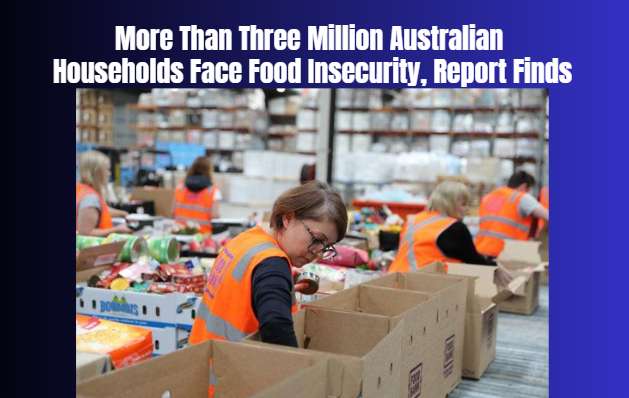
Foodbank Australia works with charities, community organisations and food suppliers to distribute food and essential groceries to people experiencing hardship. Its network supports individuals and families who might otherwise struggle to obtain enough food. Demand for assistance can place additional pressure on charities that depend on donations, volunteers and partnerships with businesses.
The latest findings also raise concerns about people who experience food insecurity but do not seek assistance. Some individuals may feel embarrassed about asking for help, while others may not know which local services are available. People living in regional and remote communities can face additional barriers when support services are limited or transport costs make it difficult to reach food relief organisations.
Food insecurity can have consequences beyond immediate hunger. A lack of consistent access to nutritious food can affect concentration, energy levels and general wellbeing. For children, inadequate nutrition may create additional challenges at school and during important stages of physical development. Adults experiencing food insecurity may also find it harder to manage work, caring responsibilities and other everyday demands.
Food relief organisations have continued to call for stronger responses to financial hardship, including adequate income support, improved access to affordable food and practical assistance for vulnerable households. Community donations and emergency food programs remain important, but organisations have also emphasised the need to address the underlying financial pressures that leave people unable to afford regular meals.
The findings highlighted on 26 October demonstrate that food insecurity remains a widespread challenge across Australia. They also show that the problem extends beyond people experiencing homelessness or extreme poverty. Working households and families can face food insecurity when essential expenses rise faster than the money available to cover them.
Foodbank’s report provides a basis for further discussion about the cost of living, household financial resilience and access to nutritious food. Addressing the issue will require continued cooperation between governments, charities, businesses and local communities to help ensure Australians can obtain adequate food without sacrificing other essential needs.
FoodInsecurityHouseholdsPeopleAlso
More than three million Australian households have experienced food insecurity over the past year, according to findings highlighted in Foodbank Australia’s latest Hunger Report. The figures, reported on 26 October 2026, underline the growing difficulties many families face in accessing sufficient, nutritious food while managing housing costs, groceries, bills and other essential expenses.
The report found that approximately one in three Australian households experienced some form of food insecurity during the previous 12 months. This includes people who have skipped meals, reduced the amount they eat or struggled to obtain enough good-quality food. The findings suggest that food insecurity remains a significant national issue, affecting households across different communities and income groups.
Food insecurity does not always mean that a household has no food at all. It can also involve regularly choosing cheaper, less nutritious products, cutting portion sizes or going without meals so that other family members can eat. These decisions can affect physical health, emotional wellbeing and the ability of children and adults to maintain healthy daily routines.
Young adults aged between 18 and 34 and couples with children were identified among the groups increasingly exposed to food insecurity. Younger Australians may face difficulties associated with insecure employment, rental costs and the expense of establishing independent households. Families with children must balance food spending with childcare, education, transport, housing and healthcare costs.
When household budgets become stretched, food is often one of the expenses people try to manage by buying less or changing their diets. Although this may provide temporary financial relief, it can make it harder to maintain a balanced diet over time. Families may also find themselves relying on cheaper processed foods or postponing purchases of fresh produce, meat and other nutritious essentials.
Foodbank Australia works with charities, community organisations and food suppliers to distribute food and essential groceries to people experiencing hardship. Its network supports individuals and families who might otherwise struggle to obtain enough food. Demand for assistance can place additional pressure on charities that depend on donations, volunteers and partnerships with businesses.
The latest findings also raise concerns about people who experience food insecurity but do not seek assistance. Some individuals may feel embarrassed about asking for help, while others may not know which local services are available. People living in regional and remote communities can face additional barriers when support services are limited or transport costs make it difficult to reach food relief organisations.
Food insecurity can have consequences beyond immediate hunger. A lack of consistent access to nutritious food can affect concentration, energy levels and general wellbeing. For children, inadequate nutrition may create additional challenges at school and during important stages of physical development. Adults experiencing food insecurity may also find it harder to manage work, caring responsibilities and other everyday demands.
Food relief organisations have continued to call for stronger responses to financial hardship, including adequate income support, improved access to affordable food and practical assistance for vulnerable households. Community donations and emergency food programs remain important, but organisations have also emphasised the need to address the underlying financial pressures that leave people unable to afford regular meals.
The findings highlighted on 26 October demonstrate that food insecurity remains a widespread challenge across Australia. They also show that the problem extends beyond people experiencing homelessness or extreme poverty. Working households and families can face food insecurity when essential expenses rise faster than the money available to cover them.
Foodbank’s report provides a basis for further discussion about the cost of living, household financial resilience and access to nutritious food. Addressing the issue will require continued cooperation between governments, charities, businesses and local communities to help ensure Australians can obtain adequate food without sacrificing other essential needs.
A large crocodile sighting near Rockhampton's proposed Olympic rowing venue has renewed concerns about public safety, wildlife management and the risks...
Indigenous women are using traditional weaving and craft-making to strengthen cultural connections, preserve knowledge passed down through generations a...
Education experts support New South Wales' proposal to replace computer-based NAPLAN writing tests with traditional pen-and-paper examinations for stude...
A pay dispute involving specialist electricity-market workers has escalated, with Australia's energy operator warning that industrial action could creat...
New figures reveal more than $3 million in government spending on promotional merchandise, including unusual items such as condoms and lollies, raising...
Australia's antisemitism envoy has recommended stronger protest rules, additional visa checks and independent oversight of public broadcasters as part o...
The Australian government has launched a parliamentary investigation into whether Australia Post is keeping up with changing customer needs as tradition...
A psychiatric report presented to South Australia's Supreme Court has raised questions about Tamika Chesser's mental competence in the case involving th...
A freedom of information request has revealed that Gold Coast Council does not hold a copy of the invoice for Mayor Tom Tate's three-day stay at Donald...