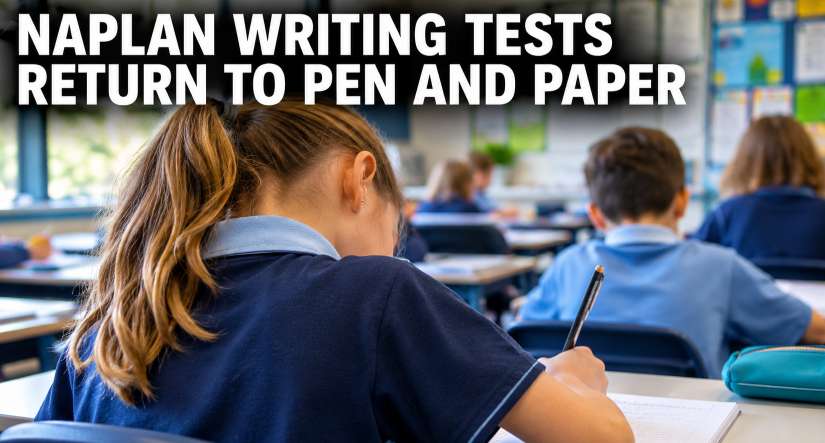
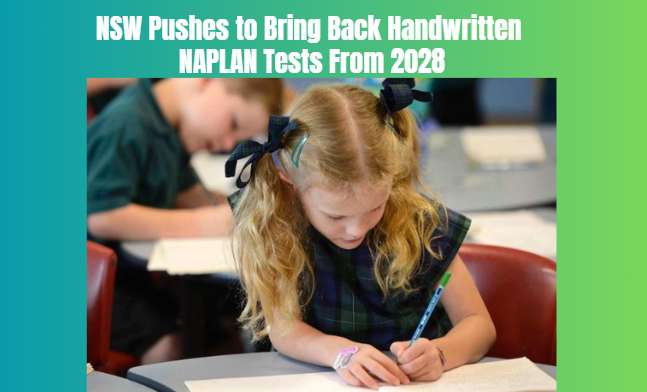
NAPLAN Writing Tests to Return to Pen and Paper from 2028
By Chloe · Published 03 Nov 2026 · Updated 03 Nov 2026
Sydney, NSW · New South Wales News
Safety note: Admin approval is an initial review, not a guarantee that every detail is correct. Check important or urgent claims with official sources and report anything inaccurate or unsafe.
Source and credit: Contributor's own report
NAPLAN Writing Tests to Return to Pen and Paper from 2028 - Sydney, NSW
Smart summary
Australian education ministers have agreed to bring back handwritten Year 5 NAPLAN writing tests, responding to concerns about excessive classroom screen use and declining writing standards.
Australia's education ministers have agreed to bring back pen-and-paper writing tests for Year 5 students taking part in the National Assessment Program – Literacy and Numeracy (NAPLAN) from 2028. The decision was announced on Tuesday, 3 November 2026, following growing concerns about students' writing abilities, excessive screen time and the impact of technology on classroom learning.
The change represents an important shift in Australia's national education assessment system. NAPLAN is conducted every year to assess students' literacy and numeracy skills in Years 3, 5, 7 and 9. The assessments help teachers, schools, parents and governments understand how students are progressing in important academic areas.
The writing component for older primary and secondary students has been conducted digitally since NAPLAN moved towards online testing in 2018. However, the latest decision means Year 5 students will return to writing their assessments by hand rather than typing their responses on computers.
New South Wales Deputy Premier and Education Minister Prue Car supported the decision, saying that students benefit from developing strong handwriting skills. She said education ministers had agreed to work towards introducing handwritten Year 5 writing assessments from 2028.
The decision comes after concerns about declining educational performance across Australia. Recent international education assessments have highlighted weaknesses in Australian students' academic results. The Programme for International Student Assessment (PISA) has also shown that Australian students spend an average of 2.6 hours per day using digital devices, compared with an OECD average of 1.7 hours.
Education experts have argued that handwriting plays an important role in developing memory, concentration and the ability to organise thoughts. They believe that writing by hand allows younger students to focus on sentence construction and communication without having to concentrate on keyboard skills.
Another concern relates to the increasing use of technology in classrooms. Computers and tablets have become common learning tools, but some teachers and parents believe students are spending too much time looking at screens.
The discussion has also been influenced by recent technical problems with online NAPLAN testing. Large-scale disruptions and concerns about digital assessment tools have raised questions about the reliability of computer-based examinations.
The Australian education ministers are also considering whether writing tests for Years 7 and 9 should return to paper. However, no final decision has been announced for those year levels.
The Australian Curriculum, Assessment and Reporting Authority (ACARA) is expected to provide further advice about the possible changes.
The announcement is part of a broader discussion about creating a better balance between traditional classroom learning and digital technology. Ministers are also considering wider measures to reduce unnecessary screen use in schools.
For parents and teachers, the decision could mean changes to classroom teaching methods, handwriting practice and assessment preparation over the coming years.
The new approach is expected to begin in 2028, giving education departments and schools time to prepare for the transition.
Australia's decision highlights an increasing national focus on foundational learning skills. While technology will continue to play an important role in education, ministers believe students should also develop strong handwriting and traditional writing abilities.
StudentsEducationWritingDecisionAssessment
Australia's education ministers have agreed to bring back pen-and-paper writing tests for Year 5 students taking part in the National Assessment Program – Literacy and Numeracy (NAPLAN) from 2028. The decision was announced on Tuesday, 3 November 2026, following growing concerns about students' writing abilities, excessive screen time and the impact of technology on classroom learning.
The change represents an important shift in Australia's national education assessment system. NAPLAN is conducted every year to assess students' literacy and numeracy skills in Years 3, 5, 7 and 9. The assessments help teachers, schools, parents and governments understand how students are progressing in important academic areas.
The writing component for older primary and secondary students has been conducted digitally since NAPLAN moved towards online testing in 2018. However, the latest decision means Year 5 students will return to writing their assessments by hand rather than typing their responses on computers.
New South Wales Deputy Premier and Education Minister Prue Car supported the decision, saying that students benefit from developing strong handwriting skills. She said education ministers had agreed to work towards introducing handwritten Year 5 writing assessments from 2028.
The decision comes after concerns about declining educational performance across Australia. Recent international education assessments have highlighted weaknesses in Australian students' academic results. The Programme for International Student Assessment (PISA) has also shown that Australian students spend an average of 2.6 hours per day using digital devices, compared with an OECD average of 1.7 hours.
Education experts have argued that handwriting plays an important role in developing memory, concentration and the ability to organise thoughts. They believe that writing by hand allows younger students to focus on sentence construction and communication without having to concentrate on keyboard skills.
Another concern relates to the increasing use of technology in classrooms. Computers and tablets have become common learning tools, but some teachers and parents believe students are spending too much time looking at screens.
The discussion has also been influenced by recent technical problems with online NAPLAN testing. Large-scale disruptions and concerns about digital assessment tools have raised questions about the reliability of computer-based examinations.
The Australian education ministers are also considering whether writing tests for Years 7 and 9 should return to paper. However, no final decision has been announced for those year levels.
The Australian Curriculum, Assessment and Reporting Authority (ACARA) is expected to provide further advice about the possible changes.
The announcement is part of a broader discussion about creating a better balance between traditional classroom learning and digital technology. Ministers are also considering wider measures to reduce unnecessary screen use in schools.
For parents and teachers, the decision could mean changes to classroom teaching methods, handwriting practice and assessment preparation over the coming years.
The new approach is expected to begin in 2028, giving education departments and schools time to prepare for the transition.
Australia's decision highlights an increasing national focus on foundational learning skills. While technology will continue to play an important role in education, ministers believe students should also develop strong handwriting and traditional writing abilities.
A proposed new suburb around 100 kilometres from Melbourne is expected to accommodate up to 13,000 people, as Victoria continues planning for future hou...
A large crocodile sighting near Rockhampton's proposed Olympic rowing venue has renewed concerns about public safety, wildlife management and the risks...
Indigenous women are using traditional weaving and craft-making to strengthen cultural connections, preserve knowledge passed down through generations a...
Education experts support New South Wales' proposal to replace computer-based NAPLAN writing tests with traditional pen-and-paper examinations for stude...
Professional Footballers Australia has launched Supreme Court proceedings over how revenue from national-team commercial deals is shared with Socceroos...
The Reserve Bank of Australia has increased the official cash rate by 0.25 percentage points, adding pressure on mortgage holders and businesses facing...
Police have charged two boys, aged 13 and 15, following investigations into alleged break-ins at a service station and fast-food restaurant in Orange, N...
Australian airline stocks have recorded strong gains after a sharp fall in oil prices, raising hopes of lower fuel expenses and improved financial condi...
New training technology at Mount Isa TAFE is giving students the opportunity to experience mining, construction and transport machinery before entering...
A fresh warning from Australia’s superannuation regulator has raised concerns about complaints and service problems across the retirement savings industry.
Western Australian Women's Interests Minister Simone McGurk says online threats and abusive messages directed at female politicians remain widespread, d...
A new report has highlighted a growing healthcare funding gap between regional and metropolitan Australia, raising concerns about access to specialist t...