Landmark Inquiry Reveals Systemic Failures in Queensland Child Protection
By Neha Maurya · Published 06 Jun 2026 · Updated 06 Jun 2026
Brisbane, QLD · Queensland News
Safety note: Admin approval is an initial review, not a guarantee that every detail is correct. Check important or urgent claims with official sources and report anything inaccurate or unsafe.
Source and credit: Contributor's own report
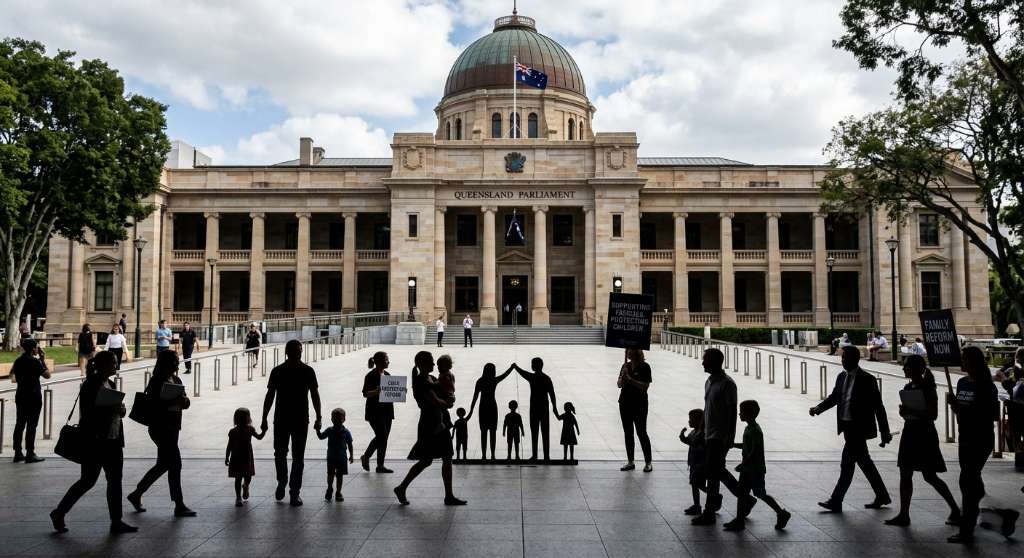
A conceptual image representing child safety and community support in Queensland.
Smart summary
A major inquiry into the Queensland child protection system has highlighted critical delays and systemic issues, sparking urgent calls for reform and greater accountability.
A landmark Commission of Inquiry has unveiled significant challenges within Queensland’s child protection system, highlighting widespread failures that have placed vulnerable children at risk. The report, which follows extensive testimony from frontline workers, families, and advocacy groups, paints a picture of a system struggling under the weight of bureaucracy and operational strain. Experts are now calling for urgent, comprehensive action to address these systemic weaknesses and restore public confidence in the state’s ability to protect its most vulnerable citizens.
Central to the inquiry’s findings is the decline in the department’s capacity to respond to reports of children at risk in a timely manner. The report identifies the rollout of the Unify data platform as a major contributor to these delays, noting that technical issues impacted information management for thousands of children. Commissioner Paul Anastassiou KC has delivered a series of recommendations aimed at restructuring service delivery, improving oversight, and implementing legislative reforms to ensure the system can effectively meet its responsibilities.
Concerns regarding the use of residential care were a recurring theme throughout the inquiry. The report emphasises that residential settings should be a last resort, noting that prolonged stays in such environments often lead to poor long-term outcomes for children. Advocates are urging the government to shift the focus toward family-based care arrangements, which are seen as more conducive to providing the stability and support necessary for a child's development.
Transparency and accountability also emerged as critical areas requiring reform. Submissions to the inquiry suggested that a culture of defensiveness and restrictive secrecy provisions have hindered the ability of families, whistleblowers, and the public to scrutinise the system. The report calls for stronger measures to ensure that the department is held accountable for its actions and that lessons from past failures are genuinely integrated into future practices.
Queensland Child Safety Minister Amanda Camm has acknowledged the gravity of the findings, noting that the report raises concerns that should resonate with all Queenslanders. The state government is currently reviewing the recommendations and is expected to provide a formal response regarding the implementation of these reforms. However, questions remain regarding the level of funding and resources required to facilitate such a significant transformation.
Child welfare experts maintain that policy changes alone will not be enough to reverse years of systemic issues. They argue that long-term investment, improved workforce support, and a renewed focus on preventative measures are essential components of any successful reform strategy. As the state moves forward, the inquiry’s report serves as a critical roadmap for building a more effective and transparent child protection system.
Further details may be updated as more information becomes available regarding the government's specific implementation timeline and budget allocations for these reforms.
ChildInquirySystemChildrenRegarding
A landmark Commission of Inquiry has unveiled significant challenges within Queensland’s child protection system, highlighting widespread failures that have placed vulnerable children at risk. The report, which follows extensive testimony from frontline workers, families, and advocacy groups, paints a picture of a system struggling under the weight of bureaucracy and operational strain. Experts are now calling for urgent, comprehensive action to address these systemic weaknesses and restore public confidence in the state’s ability to protect its most vulnerable citizens.
Central to the inquiry’s findings is the decline in the department’s capacity to respond to reports of children at risk in a timely manner. The report identifies the rollout of the Unify data platform as a major contributor to these delays, noting that technical issues impacted information management for thousands of children. Commissioner Paul Anastassiou KC has delivered a series of recommendations aimed at restructuring service delivery, improving oversight, and implementing legislative reforms to ensure the system can effectively meet its responsibilities.
Concerns regarding the use of residential care were a recurring theme throughout the inquiry. The report emphasises that residential settings should be a last resort, noting that prolonged stays in such environments often lead to poor long-term outcomes for children. Advocates are urging the government to shift the focus toward family-based care arrangements, which are seen as more conducive to providing the stability and support necessary for a child's development.
Transparency and accountability also emerged as critical areas requiring reform. Submissions to the inquiry suggested that a culture of defensiveness and restrictive secrecy provisions have hindered the ability of families, whistleblowers, and the public to scrutinise the system. The report calls for stronger measures to ensure that the department is held accountable for its actions and that lessons from past failures are genuinely integrated into future practices.
Queensland Child Safety Minister Amanda Camm has acknowledged the gravity of the findings, noting that the report raises concerns that should resonate with all Queenslanders. The state government is currently reviewing the recommendations and is expected to provide a formal response regarding the implementation of these reforms. However, questions remain regarding the level of funding and resources required to facilitate such a significant transformation.
Child welfare experts maintain that policy changes alone will not be enough to reverse years of systemic issues. They argue that long-term investment, improved workforce support, and a renewed focus on preventative measures are essential components of any successful reform strategy. As the state moves forward, the inquiry’s report serves as a critical roadmap for building a more effective and transparent child protection system.
Further details may be updated as more information becomes available regarding the government's specific implementation timeline and budget allocations for these reforms.
An automated external defibrillator and memorial plaque have been installed at Ellery Creek Big Hole following the death of disability advocate Ellen Fr...
Bathurst New South Wales · Community News · 17 Sep 2026
Kerry “Pecky” Peck, a long-standing Bathurst radio personality, has been inducted into the Bathurst Business Hall of Fame in recognition of his extensive contribution to the loc...
A new specialist family-violence support model has been introduced in Ballarat, with dedicated workers now embedded alongside Victoria Police to help people experiencing family...
Orange New South Wales · Community News · 17 Sep 2026
Orange City Council has elected a new Deputy Mayor for the next two years, with the decision announced today, 17 September 2026. The council said the election took place during...
The Queensland Police Service is facing scrutiny over conditions inside the state’s watch houses after Workplace Health and Safety Queensland issued multiple regulatory notices....
Queensland Police are investigating allegations of a serious se-xual offence connected to a private rehabilitation clinic in Queensland. The investigation has attracted attentio...
Detectives from the Upper Mt Gravatt Criminal Investigation Branch have charged two more people in connection with a fatal traffic crash that occurred in Runcorn on Sunday, 28 J...
An investigation published on 1 September 2026 has raised serious questions about safety procedures at The Star Brisbane after reports that internal warnings about a safety flaw...
Queensland's emerging football prospects are coming together for a three-day Brisbane Lions State Academy showcase, giving young players an opportunity...
A Wavell Heights enrolled nurse has been charged with four counts of alleged sexual assault and one count of wilful exposure, with his professional regi...
A 24-year-old Carina Heights man has been charged with 36 offences following an investigation into alleged break-ins, vehicle offences and other propert...
Cairns Regional Council has unanimously voted to seek $400,000 in Queensland Government funding for a program designed to connect local businesses with the region’s growing film...
An automated external defibrillator and memorial plaque have been installed at Ellery Creek Big Hole following the death of disability advocate Ellen Fr...
Queensland firefighters spent several hours monitoring a significant grass fire at Mary Kinross Park in Bargara, near Bundaberg, after the blaze broke out on Wednesday evening....