Safety note: Admin approval is an initial review, not a guarantee that every detail is correct. Check important or urgent claims with official sources and report anything inaccurate or unsafe.
Source and credit: Contributor's own report
Treasurer Tom Koutsantonis delivering the South Australian State Budget.
Smart summary
The South Australian Government has unveiled its 2026-27 budget, prioritising housing affordability, healthcare investment, and cost-of-living support while managing a projected rise in state debt.
The South Australian Government has handed down its first budget since its decisive election victory earlier this year, unveiling a package centred on housing affordability, healthcare investment, education support and cost-of-living relief while projecting state debt will rise above $50 billion in the years ahead. Treasurer Tom Koutsantonis delivered the 2026–27 State Budget in Adelaide on Thursday, describing it as a responsible plan designed to meet growing demand for services while maintaining budget surpluses.
A major focus of the budget is easing pressure on households facing rising living costs. The government announced more than $500 million in cost-of-living measures, including the abolition of public school fees, support for school camps, childcare assistance, IVF rebates and expanded benefits for Seniors Card holders. Officials say these measures are intended to provide meaningful financial relief for families and older South Australians.
Housing remains another key priority, with a multi-billion-dollar package aimed at increasing housing supply and improving affordability. The government has committed funding for land development, apartment construction, rent-to-own programs and first-home buyer assistance, with the goal of increasing annual housing construction across the state. The measures form part of a broader strategy to address housing shortages and support population growth.
Healthcare accounts for the largest area of government spending. Budget papers show approximately $11 billion will be allocated to health and wellbeing services during 2026–27, contributing to around $45 billion in health expenditure over the next four years. Significant investments include funding to improve hospital capacity, reduce pressure on emergency departments, expand mental health services and continue construction of the new Women's and Children's Hospital.
The budget also includes substantial investment in infrastructure, skills training and economic development. Major projects such as the North-South Corridor road upgrades and transport improvements continue to account for a significant share of government expenditure. Additional funding has been directed toward vocational education, industry development and research initiatives aimed at strengthening South Australia's economy and workforce.
Despite the significant spending commitments, the government maintains it will remain in surplus throughout the forward estimates. However, state debt is forecast to rise to approximately $53.6 billion by 2029–30 as major infrastructure projects continue. Treasurer Koutsantonis argued that the debt remains manageable because it is largely funding long-term assets rather than day-to-day operating expenses.
The budget also introduces a partial hiring freeze across non-frontline public service positions. Under the plan, agencies will generally replace only one out of every two departing non-frontline employees over the next year. The government estimates the measure will reduce workforce growth by around 1,000 positions and save approximately $120 million annually. Frontline workers, including police, nurses, teachers and emergency personnel, will not be affected.
In addition, funding has been allocated for treaty and truth-telling initiatives involving Aboriginal communities, with the establishment of a commission intended to support future treaty discussions and improve outcomes across health, education and economic development.
While the government has promoted the budget as delivering stability, economic growth and relief for families, opposition parties have raised concerns about rising debt levels and public sector spending. Debate is expected to continue as parliament examines the budget measures in the coming weeks.
BudgetGovernmentHousingWillFunding
The South Australian Government has handed down its first budget since its decisive election victory earlier this year, unveiling a package centred on housing affordability, healthcare investment, education support and cost-of-living relief while projecting state debt will rise above $50 billion in the years ahead. Treasurer Tom Koutsantonis delivered the 2026–27 State Budget in Adelaide on Thursday, describing it as a responsible plan designed to meet growing demand for services while maintaining budget surpluses.
A major focus of the budget is easing pressure on households facing rising living costs. The government announced more than $500 million in cost-of-living measures, including the abolition of public school fees, support for school camps, childcare assistance, IVF rebates and expanded benefits for Seniors Card holders. Officials say these measures are intended to provide meaningful financial relief for families and older South Australians.
Housing remains another key priority, with a multi-billion-dollar package aimed at increasing housing supply and improving affordability. The government has committed funding for land development, apartment construction, rent-to-own programs and first-home buyer assistance, with the goal of increasing annual housing construction across the state. The measures form part of a broader strategy to address housing shortages and support population growth.
Healthcare accounts for the largest area of government spending. Budget papers show approximately $11 billion will be allocated to health and wellbeing services during 2026–27, contributing to around $45 billion in health expenditure over the next four years. Significant investments include funding to improve hospital capacity, reduce pressure on emergency departments, expand mental health services and continue construction of the new Women's and Children's Hospital.
The budget also includes substantial investment in infrastructure, skills training and economic development. Major projects such as the North-South Corridor road upgrades and transport improvements continue to account for a significant share of government expenditure. Additional funding has been directed toward vocational education, industry development and research initiatives aimed at strengthening South Australia's economy and workforce.
Despite the significant spending commitments, the government maintains it will remain in surplus throughout the forward estimates. However, state debt is forecast to rise to approximately $53.6 billion by 2029–30 as major infrastructure projects continue. Treasurer Koutsantonis argued that the debt remains manageable because it is largely funding long-term assets rather than day-to-day operating expenses.
The budget also introduces a partial hiring freeze across non-frontline public service positions. Under the plan, agencies will generally replace only one out of every two departing non-frontline employees over the next year. The government estimates the measure will reduce workforce growth by around 1,000 positions and save approximately $120 million annually. Frontline workers, including police, nurses, teachers and emergency personnel, will not be affected.
In addition, funding has been allocated for treaty and truth-telling initiatives involving Aboriginal communities, with the establishment of a commission intended to support future treaty discussions and improve outcomes across health, education and economic development.
While the government has promoted the budget as delivering stability, economic growth and relief for families, opposition parties have raised concerns about rising debt levels and public sector spending. Debate is expected to continue as parliament examines the budget measures in the coming weeks.
Darwin Northern Territory · Other News · 01 Sep 2026
A scenic hike through Butterfly Gorge in the Northern Territory turned into a frightening experience when a buffalo charged at two hikers. ABC Darwin reported the story today, 1...
Coffs Harbour New South Wales · Other News · 01 Sep 2026
A Safe Work NSW inspection blitz across the Coffs Harbour region has uncovered dozens of workplace-safety issues in the horticulture industry. The operation followed concerns ab...
A major Queensland Government infrastructure investment is set to unlock thousands of new homes across the Fraser Coast, including projects in Maryborough.
Adelaide South Australia · Crime News · 27 Aug 2026
South Australia Police are investigating an attempted robbery involving a cyclist in Klemzig. The incident occurred yesterday, and police have appealed for information that coul...
Adelaide South Australia · Crime News · 27 Aug 2026
South Australia Police have arrested a man at Brahma Lodge, in Adelaide’s northern suburbs, following an investigation that has resulted in serious firearms charges. Police say...
Adelaide South Australia · Crime News · 27 Aug 2026
Two historic bronze busts have been stolen from North Terrace in Adelaide’s CBD, prompting a police investigation and renewed concern about metal theft across South Australia. T...
Adelaide South Australia · Sports News · 29 Jul 2026
Adelaide United has announced the extension of its partnership with Mega Rewards, confirming the company will continue as the club's official front-of-shirt partner for the 2026...
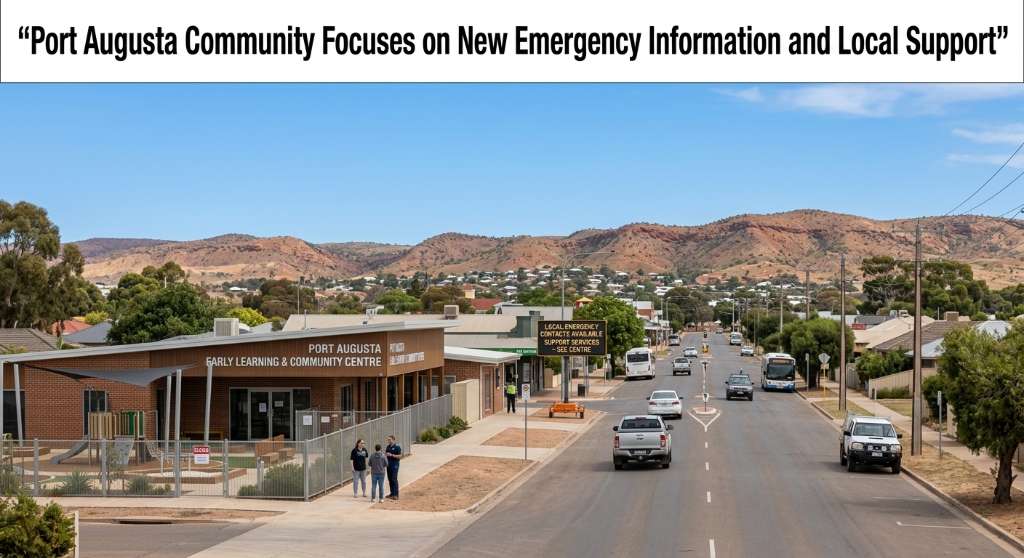
New community information initiatives are helping residents access emergency warnings and local support as Port Augusta and the wider region prepare for...
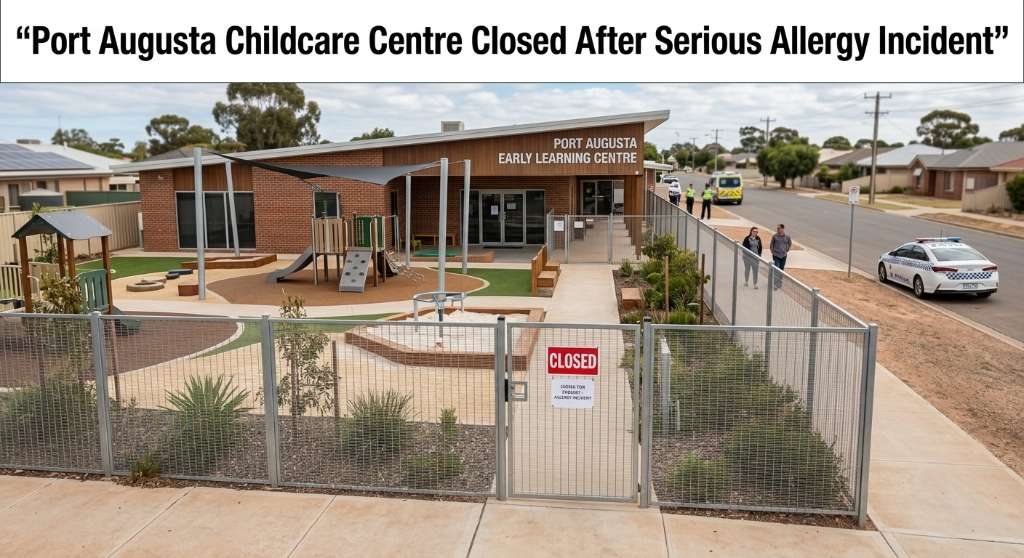
An Edge Early Learning centre in Port Augusta has been ordered to close for two weeks after a child with allergies was hospitalised after being given fo...
A 44-year-old man has been jailed after police found suspected methamphetamine, GHB and more than $40,000 in cash before he travelled towards Mount Gamb...
Cairns Regional Council has unanimously voted to seek $400,000 in Queensland Government funding for a program designed to connect local businesses with the region’s growing film...
An automated external defibrillator and memorial plaque have been installed at Ellery Creek Big Hole following the death of disability advocate Ellen Fr...
Queensland firefighters spent several hours monitoring a significant grass fire at Mary Kinross Park in Bargara, near Bundaberg, after the blaze broke out on Wednesday evening....