Tongan Man Deported From Australia Sentenced to 12 Years Over Comancheros Gang
By Chloe · Published 22 Oct 2026 · Updated 22 Oct 2026
Tonga, ACT
Safety note: Admin approval is an initial review, not a guarantee that every detail is correct. Check important or urgent claims with official sources and report anything inaccurate or unsafe.
Source and credit: Contributor's own report
Tongan Man Deported From Australia Sentenced to 12 Years Over Comancheros Gang - Tonga, ACT
Smart summary
Eneasi Taumoefolau has received a 12-year prison sentence in Tonga for attempting to establish a local chapter of the Comancheros outlaw motorcycle gang. He was previously deported from Australia after drug conviction...
A Tongan man who was deported from Australia in 2022 has been sentenced to 12 years in prison for attempting to establish a branch of the Comancheros outlaw motorcycle gang in Tonga. The sentence was handed down on Thursday, 22 October 2026, following his conviction under legislation targeting organised crime and transnational criminal activity.
Eneasi Taumoefolau was found guilty last month of participating in an organised criminal group after attempting to establish the gang's presence in Tonga during 2024. The sentencing judge, Justice Elisapeti Langi, described his actions as a serious threat to Tongan society and raised concerns about foreign criminal syndicates using Pacific island nations to facilitate organised criminal activities.
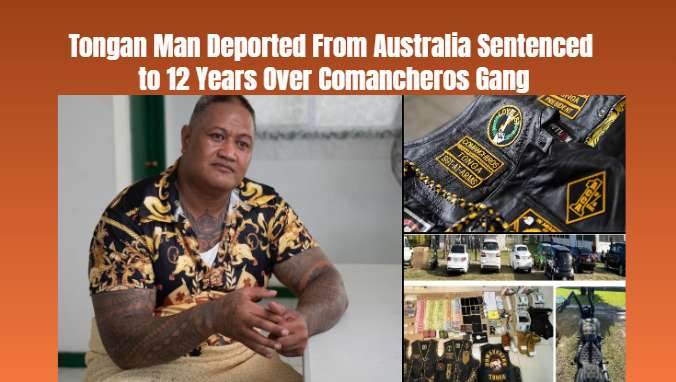
Taumoefolau was described in court as the president and leader of the proposed Tongan chapter. Evidence presented during proceedings included photographs and other material showing him wearing Comancheros clothing, displaying gang insignia and riding a motorcycle bearing the group's name.
Police also searched a storage unit rented in the name of his partner. Investigators reportedly discovered bags containing T-shirts with Comancheros logos, gang signs, vests and clothing displaying different ranks within the organisation. The evidence was used to support the prosecution's case that the activities went beyond simply expressing an interest in the group.
Born in Tonga, Taumoefolau moved to Australia with his family when he was eight years old. He spent much of his life in the Victorian regional town of Robinvale. In 2022, he was deported to Tonga following a series of drug convictions in Australia.
During an interview with the ABC earlier in 2026, Taumoefolau said he had attempted to establish the gang chapter partly to anger the Australian government over his deportation. He also described his social media posts displaying gang-related clothing and symbols as an attempt to provoke a reaction.
His legal troubles in Tonga extend beyond the latest sentence. In 2025, he was convicted of importing more than two kilograms of methamphetamine from the United States and received a life sentence. The new 12-year term will run concurrently with that existing sentence, meaning the two sentences will be served at the same time. Taumoefolau has indicated that he intends to appeal the gang-related conviction or sentence.
The case has drawn attention to concerns about the expansion of organised criminal networks across the Pacific. Regional authorities have warned that criminal groups may exploit the region's geography and transport routes to move illegal drugs towards Australia and New Zealand.
The Australian government has announced additional funding for regional cooperation against drug trafficking, including a $600 million Pacific initiative. Australia has also supported maritime monitoring efforts in the region to help authorities identify suspicious activity and disrupt illicit shipments.
The case marks the first time Tonga's Counter Terrorism and Transnational Crimes Act has been tested in court in this manner. The sentence reflects the court's assessment of the seriousness of attempting to establish an organised criminal group within the country.
CriminalGangSentenceTongaOrganised
A Tongan man who was deported from Australia in 2022 has been sentenced to 12 years in prison for attempting to establish a branch of the Comancheros outlaw motorcycle gang in Tonga. The sentence was handed down on Thursday, 22 October 2026, following his conviction under legislation targeting organised crime and transnational criminal activity.
Eneasi Taumoefolau was found guilty last month of participating in an organised criminal group after attempting to establish the gang's presence in Tonga during 2024. The sentencing judge, Justice Elisapeti Langi, described his actions as a serious threat to Tongan society and raised concerns about foreign criminal syndicates using Pacific island nations to facilitate organised criminal activities.
Taumoefolau was described in court as the president and leader of the proposed Tongan chapter. Evidence presented during proceedings included photographs and other material showing him wearing Comancheros clothing, displaying gang insignia and riding a motorcycle bearing the group's name.
Police also searched a storage unit rented in the name of his partner. Investigators reportedly discovered bags containing T-shirts with Comancheros logos, gang signs, vests and clothing displaying different ranks within the organisation. The evidence was used to support the prosecution's case that the activities went beyond simply expressing an interest in the group.
Born in Tonga, Taumoefolau moved to Australia with his family when he was eight years old. He spent much of his life in the Victorian regional town of Robinvale. In 2022, he was deported to Tonga following a series of drug convictions in Australia.
During an interview with the ABC earlier in 2026, Taumoefolau said he had attempted to establish the gang chapter partly to anger the Australian government over his deportation. He also described his social media posts displaying gang-related clothing and symbols as an attempt to provoke a reaction.
His legal troubles in Tonga extend beyond the latest sentence. In 2025, he was convicted of importing more than two kilograms of methamphetamine from the United States and received a life sentence. The new 12-year term will run concurrently with that existing sentence, meaning the two sentences will be served at the same time. Taumoefolau has indicated that he intends to appeal the gang-related conviction or sentence.
The case has drawn attention to concerns about the expansion of organised criminal networks across the Pacific. Regional authorities have warned that criminal groups may exploit the region's geography and transport routes to move illegal drugs towards Australia and New Zealand.
The Australian government has announced additional funding for regional cooperation against drug trafficking, including a $600 million Pacific initiative. Australia has also supported maritime monitoring efforts in the region to help authorities identify suspicious activity and disrupt illicit shipments.
The case marks the first time Tonga's Counter Terrorism and Transnational Crimes Act has been tested in court in this manner. The sentence reflects the court's assessment of the seriousness of attempting to establish an organised criminal group within the country.
A former out-of-home care manager has pleaded not guilty to 30 charges, including alleged sexual assaults and choking offences involving five women over...
Two Colombian police departments say they have no record of operational cooperation with Australia's newly announced anti-drug taskforce, raising questi...
Victorian police are searching for the driver of a white semi-trailer truck after a motorcyclist was found dead on the Maroondah Highway near Yarck. Inv...
Former youth detainees across Australia have come forward with allegations of sexual abuse, physical assaults and inappropriate strip-searches in custod...
A partnership is helping aged care employees access women’s health information in their preferred languages, with reported improvements in confidence ar...
The ASX is maintaining a lower dividend payout and increasing spending on technology as it works to strengthen the reliability of Australia's financial...
The new driverless metro service will connect Bankstown and Sydney’s south-western suburbs directly with the CBD and the north-west, ending more than tw...
Alinta Energy has withdrawn plans for a major renewable energy storage project, citing financial pressures, construction challenges and transmission-lin...