Safety note: Admin approval is an initial review, not a guarantee that every detail is correct. Check important or urgent claims with official sources and report anything inaccurate or unsafe.
Source and credit: Contributor's own report
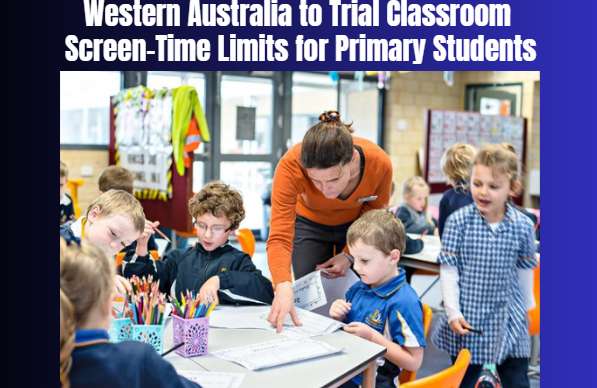
Western Australia to Trial Classroom Screen-Time Limits for Primary Students - Pilot, WA
Smart summary
Ten public schools will trial restrictions on classroom screen time for younger students from Term 1, 2027, as the state looks to strengthen face-to-face teaching and hands-on learning.
Western Australia will trial limits on classroom screen time for younger primary school students in a new education initiative designed to encourage more face-to-face teaching, practical activities and direct interaction between students and teachers.
The program, called Back to Basics, is scheduled to begin in Term 1 of 2027. It will run for six months across 10 public schools, with each participating school receiving $50,000 to purchase learning materials and support the shift towards screen-free classroom activities.
The trial will focus on students from Kindergarten to Year 2, an age group in which foundational literacy, numeracy, communication and social skills are developed. The state government wants schools to consider whether digital devices are being used where traditional teaching methods, books, writing materials and hands-on activities could be more effective.
Western Australian Education Minister Sabine Winton said it was an appropriate time to examine both the benefits and the effects of screens in classrooms. Premier Roger Cook also stressed that technology should not automatically become the default teaching method simply because digital devices are widely available. Under the proposed trial, students will not lose all access to technology. Digital devices will remain available when needed to teach required technology skills and for activities such as NAPLAN testing, which is conducted online. The initiative is intended to reduce unnecessary screen use rather than remove technology from education entirely.
The announcement follows growing debate across Australia about how much time children should spend using screens during the school day. New South Wales introduced a daily screen-time limit for students in Kindergarten to Year 2 in September, while Victoria has announced requirements for planned screen-free periods in public secondary schools.
Researchers and child-development specialists have highlighted the importance of early childhood as a period for establishing healthy habits and building the skills children need throughout their education. The trial will allow participating schools to explore how classroom routines change when more learning takes place through discussion, writing, reading and physical activities.
The policy debate also comes after Australia recorded its poorest results on record in reading and numeracy, adding pressure on education systems to review how students learn and how classroom resources are used. The six-month pilot is expected to provide information about how screen-time restrictions can be implemented in different school environments. Its outcomes may help the state government decide whether a broader approach is appropriate.
For families and teachers, the central question will be how to balance the educational opportunities offered by technology with the benefits of direct instruction and practical learning. The trial will test whether a more deliberate approach to classroom screens can improve that balance for younger students.
StudentsWillClassroomTrialActivities
Western Australia will trial limits on classroom screen time for younger primary school students in a new education initiative designed to encourage more face-to-face teaching, practical activities and direct interaction between students and teachers.
The program, called Back to Basics, is scheduled to begin in Term 1 of 2027. It will run for six months across 10 public schools, with each participating school receiving $50,000 to purchase learning materials and support the shift towards screen-free classroom activities.
The trial will focus on students from Kindergarten to Year 2, an age group in which foundational literacy, numeracy, communication and social skills are developed. The state government wants schools to consider whether digital devices are being used where traditional teaching methods, books, writing materials and hands-on activities could be more effective.
Western Australian Education Minister Sabine Winton said it was an appropriate time to examine both the benefits and the effects of screens in classrooms. Premier Roger Cook also stressed that technology should not automatically become the default teaching method simply because digital devices are widely available. Under the proposed trial, students will not lose all access to technology. Digital devices will remain available when needed to teach required technology skills and for activities such as NAPLAN testing, which is conducted online. The initiative is intended to reduce unnecessary screen use rather than remove technology from education entirely.
The announcement follows growing debate across Australia about how much time children should spend using screens during the school day. New South Wales introduced a daily screen-time limit for students in Kindergarten to Year 2 in September, while Victoria has announced requirements for planned screen-free periods in public secondary schools.
Researchers and child-development specialists have highlighted the importance of early childhood as a period for establishing healthy habits and building the skills children need throughout their education. The trial will allow participating schools to explore how classroom routines change when more learning takes place through discussion, writing, reading and physical activities.
The policy debate also comes after Australia recorded its poorest results on record in reading and numeracy, adding pressure on education systems to review how students learn and how classroom resources are used. The six-month pilot is expected to provide information about how screen-time restrictions can be implemented in different school environments. Its outcomes may help the state government decide whether a broader approach is appropriate.
For families and teachers, the central question will be how to balance the educational opportunities offered by technology with the benefits of direct instruction and practical learning. The trial will test whether a more deliberate approach to classroom screens can improve that balance for younger students.
A new report warns that rising rents, electricity bills, transport costs and food prices are placing severe pressure on households across the Northern T...
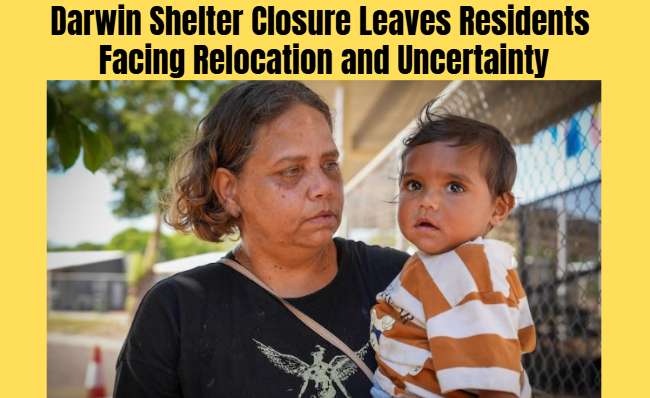
Residents of Darwin’s largest short-stay accommodation facility are facing relocation to Batchelor, around 100 kilometres away, amid concerns about acce...
Wildlife rescuers are struggling to care for unusually large numbers of underweight baby flying foxes born prematurely, while the cause of the suspected...
A Queensland Police Service annual report shows the service failed to meet its targets for public perceptions of honesty, trust, fairness and profession...
Australian Simon Peter Carman has agreed to plead guilty to concealing the body of 17-year-old Tunchanok Donhomla in Thailand, while contesting the othe...
Tesla has applied to increase the number of fast-charging stalls in Kaniva, western Victoria, from 10 to 18. Local businesses say the charging station i...
One person was taken to hospital with critical-priority injuries and another was taken into custody after a police pursuit ended in a serious multi-vehi...
Emergency crews carried out a complex, hours-long rescue at a Grain Corp facility in Dunolly after a man in his 60s became trapped in grain. He was freed...
Shumsheer Singh Ghumman, 47, has reportedly refused food in prison after alleging he was assaulted by fellow inmates. He has pleaded not guilty to 35 ch...
Australia’s Foreign Minister has criticised the postponement of Palestinian elections, warning that continued delays could undermine democratic accounta...
One Nation’s Victorian deputy leader Colleen Harkin has rejected claims that an AI-generated campaign video was racist after criticism of its depiction...
Australian Simon Peter Carman has agreed to plead guilty to concealing the body of 17-year-old Tunchanok Donhomla in Thailand, while contesting the othe...