Safety note: Admin approval is an initial review, not a guarantee that every detail is correct. Check important or urgent claims with official sources and report anything inaccurate or unsafe.
Source and credit: Contributor's own report
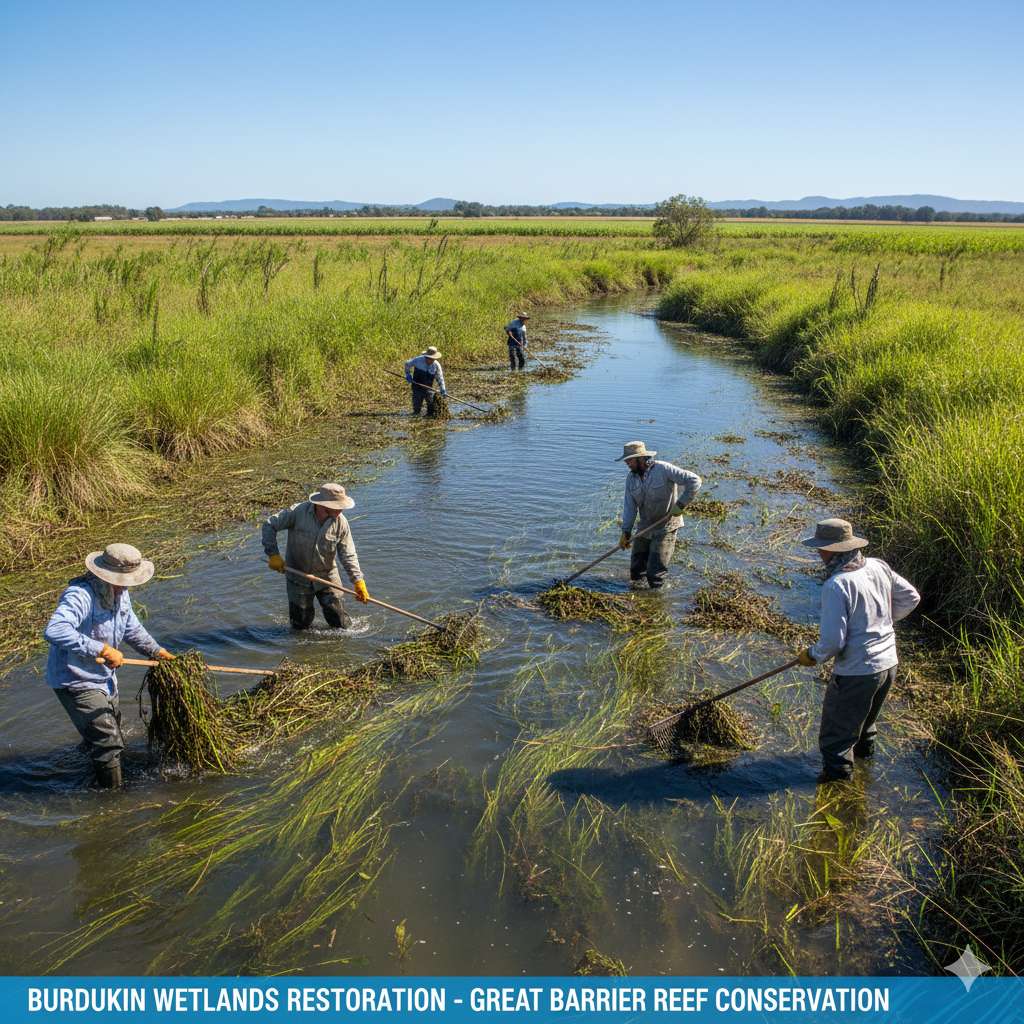
A view of the Burdekin Creek area where restoration efforts are taking place.
Smart summary
NQ Dry Tropics has launched an experimental project at Burdekin Creek, utilizing weed composting and strategic water management to reduce pollution runoff into the Great Barrier Reef.
A major environmental restoration experiment is underway in Queensland's Burdekin region, where natural resource management organisation NQ Dry Tropics is trialling a range of innovative techniques designed to improve creek health and reduce pollution flowing toward the Great Barrier Reef. The project focuses on the Sheepstation, Plantation, and Kalamia creek systems, which play an important role in both local agriculture and regional ecosystems.
The initiative combines several environmental management strategies into what project leaders describe as a "treatment train" approach. Rather than relying on a single solution, the project aims to tackle water quality issues through a combination of weed removal, creek restoration, improved irrigation practices, fire management, and revegetation activities. The ultimate goal is to reduce the amount of sediment, nutrients, and agricultural pollutants entering waterways before they reach the Great Barrier Reef lagoon.
One of the most visible aspects of the project involves removing large quantities of invasive aquatic weeds that have accumulated in local wetlands and waterways. These weeds can restrict water flow, reduce habitat quality, and negatively affect ecosystem health. Instead of disposing of the material as waste, project teams are converting the harvested weeds into compost that can be used by local farmers. This circular-economy approach transforms an environmental problem into a useful agricultural resource while reducing waste.
According to NQ Dry Tropics Wetlands Team Leader Scott Fry, the project is intended to demonstrate that productive agriculture and environmental protection can work together successfully. The organisation hopes the trial will provide practical examples of how farming communities can improve sustainability while maintaining productivity.
Beyond weed removal, the project includes four additional strategies. These involve reducing excessively hot fires near waterways, planting native vegetation along creek banks, trialling new water treatment technologies, and improving irrigation water delivery systems. Better irrigation management is particularly important because excess water entering creeks during naturally dry periods can alter wetland ecosystems and encourage weed growth.
Environmental experts say healthy wetlands act as natural filtration systems. They can trap sediments, absorb nutrients, and process pollutants before they move downstream. However, years of altered water flows, agricultural development, and invasive species have reduced the effectiveness of many wetlands across the lower Burdekin region. Restoration efforts aim to rebuild these natural functions and improve long-term water quality outcomes.
The project brings together several partners, including Lower Burdekin Water, Burdekin Shire Council, and Bindal Traditional Owners. Funding is being provided through the Australian Government's Reef Trust program, which supports initiatives aimed at protecting the Great Barrier Reef from land-based pollution.
Researchers and environmental managers will closely monitor the project over time to measure improvements in water quality and ecosystem health. If successful, the techniques could potentially be expanded to other waterways across North Queensland, providing a model for balancing agricultural productivity with environmental conservation. The experiment highlights growing efforts to protect both regional farming industries and one of Australia's most important natural assets—the Great Barrier Reef.
ProjectWaterEnvironmentalReefBarrier
A major environmental restoration experiment is underway in Queensland's Burdekin region, where natural resource management organisation NQ Dry Tropics is trialling a range of innovative techniques designed to improve creek health and reduce pollution flowing toward the Great Barrier Reef. The project focuses on the Sheepstation, Plantation, and Kalamia creek systems, which play an important role in both local agriculture and regional ecosystems.
The initiative combines several environmental management strategies into what project leaders describe as a "treatment train" approach. Rather than relying on a single solution, the project aims to tackle water quality issues through a combination of weed removal, creek restoration, improved irrigation practices, fire management, and revegetation activities. The ultimate goal is to reduce the amount of sediment, nutrients, and agricultural pollutants entering waterways before they reach the Great Barrier Reef lagoon.
One of the most visible aspects of the project involves removing large quantities of invasive aquatic weeds that have accumulated in local wetlands and waterways. These weeds can restrict water flow, reduce habitat quality, and negatively affect ecosystem health. Instead of disposing of the material as waste, project teams are converting the harvested weeds into compost that can be used by local farmers. This circular-economy approach transforms an environmental problem into a useful agricultural resource while reducing waste.
According to NQ Dry Tropics Wetlands Team Leader Scott Fry, the project is intended to demonstrate that productive agriculture and environmental protection can work together successfully. The organisation hopes the trial will provide practical examples of how farming communities can improve sustainability while maintaining productivity.
Beyond weed removal, the project includes four additional strategies. These involve reducing excessively hot fires near waterways, planting native vegetation along creek banks, trialling new water treatment technologies, and improving irrigation water delivery systems. Better irrigation management is particularly important because excess water entering creeks during naturally dry periods can alter wetland ecosystems and encourage weed growth.
Environmental experts say healthy wetlands act as natural filtration systems. They can trap sediments, absorb nutrients, and process pollutants before they move downstream. However, years of altered water flows, agricultural development, and invasive species have reduced the effectiveness of many wetlands across the lower Burdekin region. Restoration efforts aim to rebuild these natural functions and improve long-term water quality outcomes.
The project brings together several partners, including Lower Burdekin Water, Burdekin Shire Council, and Bindal Traditional Owners. Funding is being provided through the Australian Government's Reef Trust program, which supports initiatives aimed at protecting the Great Barrier Reef from land-based pollution.
Researchers and environmental managers will closely monitor the project over time to measure improvements in water quality and ecosystem health. If successful, the techniques could potentially be expanded to other waterways across North Queensland, providing a model for balancing agricultural productivity with environmental conservation. The experiment highlights growing efforts to protect both regional farming industries and one of Australia's most important natural assets—the Great Barrier Reef.
Darwin Northern Territory · Other News · 01 Sep 2026
A scenic hike through Butterfly Gorge in the Northern Territory turned into a frightening experience when a buffalo charged at two hikers. ABC Darwin reported the story today, 1...
Coffs Harbour New South Wales · Other News · 01 Sep 2026
A Safe Work NSW inspection blitz across the Coffs Harbour region has uncovered dozens of workplace-safety issues in the horticulture industry. The operation followed concerns ab...
A major Queensland Government infrastructure investment is set to unlock thousands of new homes across the Fraser Coast, including projects in Maryborough.
Queensland's emerging football prospects are coming together for a three-day Brisbane Lions State Academy showcase, giving young players an opportunity...
A Wavell Heights enrolled nurse has been charged with four counts of alleged sexual assault and one count of wilful exposure, with his professional regi...
A 24-year-old Carina Heights man has been charged with 36 offences following an investigation into alleged break-ins, vehicle offences and other propert...
Cairns Regional Council has unanimously voted to seek $400,000 in Queensland Government funding for a program designed to connect local businesses with the region’s growing film...
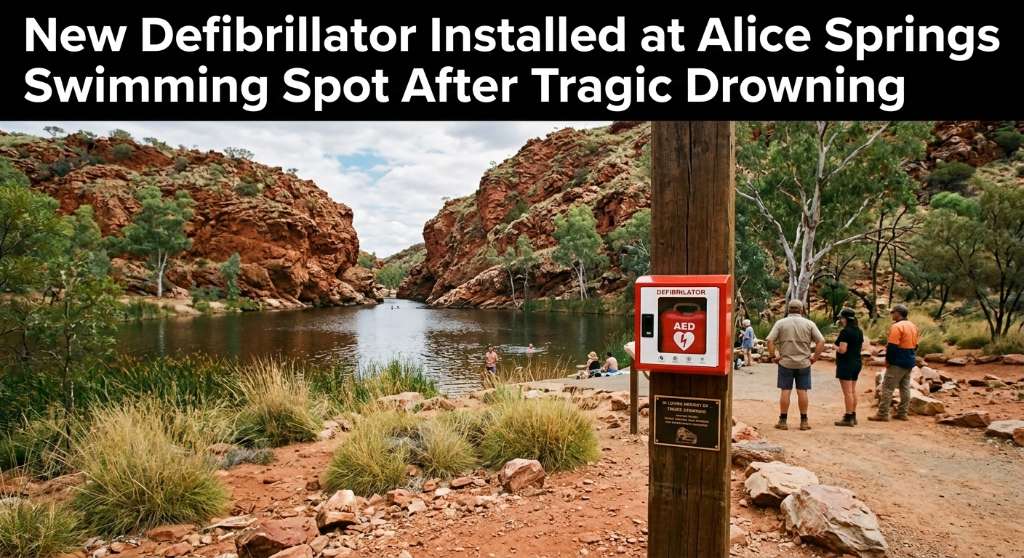
An automated external defibrillator and memorial plaque have been installed at Ellery Creek Big Hole following the death of disability advocate Ellen Fr...
Queensland firefighters spent several hours monitoring a significant grass fire at Mary Kinross Park in Bargara, near Bundaberg, after the blaze broke out on Wednesday evening....