From Patient to Peer: Queensland Man Returns to Mental Health Wards to Support Others
By Neha Maurya · Published 06 Jun 2026 · Updated 06 Jun 2026
Gold Coast, Queensland · Queensland News
Safety note: Admin approval is an initial review, not a guarantee that every detail is correct. Check important or urgent claims with official sources and report anything inaccurate or unsafe.
Source and credit: Contributor's own report
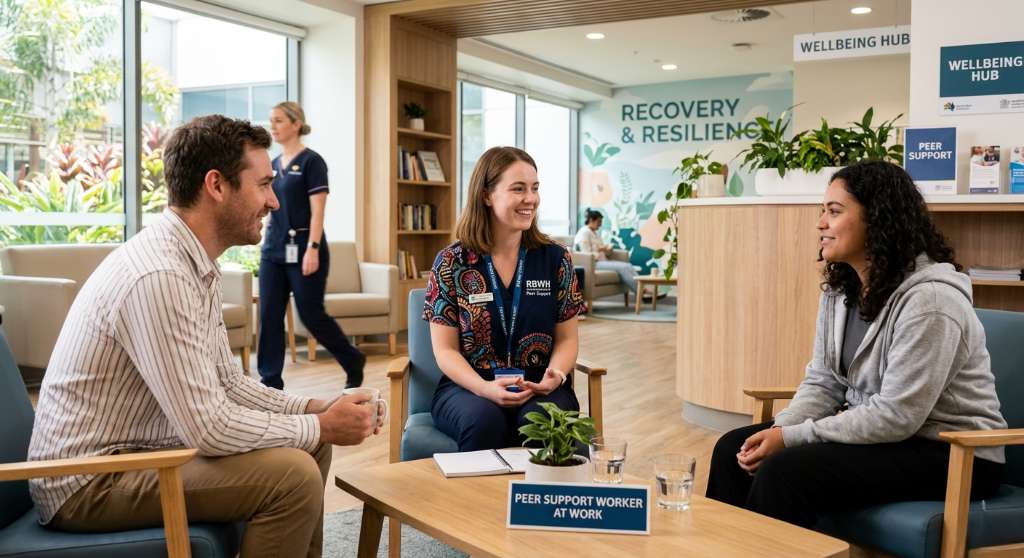
A conceptual image representing mental health support and recovery in a clinical setting.
Smart summary
A young Queensland man who overcame homelessness and a mental health crisis is now working within the system that supported his recovery, aiming to provide hope to those currently in care.
A remarkable story of resilience and recovery is inspiring communities across Queensland after a former homeless teenager who once stood on the brink of taking his own life returned to mental health wards to help others facing similar struggles.
At just 19 years old, Ari Travis has transformed his life from one marked by homelessness, mental health challenges, and repeated hospital admissions into one dedicated to supporting vulnerable people on their own recovery journeys. Today, he works as a peer support worker with Metro South Health’s Social Inclusion and Recovery Team (SIRT) at Logan Hospital, where he uses his lived experience to assist patients navigating mental health difficulties.
Ari's journey was far from easy. As a teenager, he experienced periods of homelessness, sleeping rough in areas including Southport and Beenleigh while struggling with significant mental health issues. During those difficult years, he frequently moved between the streets and mental health facilities, often unsure what the future might hold.
One of the most defining moments in his life occurred when he stood on a Gold Coast overpass contemplating suicide. Traffic below had been stopped while emergency responders attempted to reach him. Ari recalls a police officer encouraging him to look toward the future rather than the despair he was experiencing in that moment. The intervention became a turning point that ultimately helped steer him toward recovery.
Today, Ari channels those experiences into helping others. As a peer worker, he provides support that complements clinical treatment by offering understanding that comes from firsthand experience. He assists patients in mental health wards, helping them feel heard and understood while working alongside doctors, nurses, and other healthcare professionals. His role focuses on building trust and demonstrating that recovery is possible, even during the most difficult periods of life.
Ari has also contributed to initiatives aimed at improving cultural understanding within mental health services. One project involved helping develop a Māori recovery resource designed to better support Indigenous and culturally diverse patients. His work has been praised for helping bridge communication gaps between patients and healthcare providers.
Despite achieving stability, including securing his own accommodation and employment, Ari remains committed to giving back to the community that supported him. He frequently speaks about the importance of compassion, understanding, and recognising the human stories behind issues such as homelessness, youth crime, and mental illness.
His dedication to community service has already attracted wider recognition. Ari was recently named the 2026 Youth Parliament Member for Woodridge and is working on initiatives aimed at assisting young people experiencing homelessness. His vision includes creating safe spaces where vulnerable youth can access support, shelter, and connections to services.
Mental health advocates say Ari’s story highlights the value of peer support programs, where people with lived experience can provide hope and practical guidance to those currently facing similar challenges. His journey demonstrates that recovery is possible and that individuals who have overcome adversity can play a powerful role in helping others do the same.
Today, Ari continues to work inside the very system that once cared for him, using his experience not only to support patients but also to inspire change. His story stands as a powerful reminder that hope, community support, and determination can transform lives.
HealthMentalSupportRecoveryHelping
A remarkable story of resilience and recovery is inspiring communities across Queensland after a former homeless teenager who once stood on the brink of taking his own life returned to mental health wards to help others facing similar struggles.
At just 19 years old, Ari Travis has transformed his life from one marked by homelessness, mental health challenges, and repeated hospital admissions into one dedicated to supporting vulnerable people on their own recovery journeys. Today, he works as a peer support worker with Metro South Health’s Social Inclusion and Recovery Team (SIRT) at Logan Hospital, where he uses his lived experience to assist patients navigating mental health difficulties.
Ari's journey was far from easy. As a teenager, he experienced periods of homelessness, sleeping rough in areas including Southport and Beenleigh while struggling with significant mental health issues. During those difficult years, he frequently moved between the streets and mental health facilities, often unsure what the future might hold.
One of the most defining moments in his life occurred when he stood on a Gold Coast overpass contemplating suicide. Traffic below had been stopped while emergency responders attempted to reach him. Ari recalls a police officer encouraging him to look toward the future rather than the despair he was experiencing in that moment. The intervention became a turning point that ultimately helped steer him toward recovery.
Today, Ari channels those experiences into helping others. As a peer worker, he provides support that complements clinical treatment by offering understanding that comes from firsthand experience. He assists patients in mental health wards, helping them feel heard and understood while working alongside doctors, nurses, and other healthcare professionals. His role focuses on building trust and demonstrating that recovery is possible, even during the most difficult periods of life.
Ari has also contributed to initiatives aimed at improving cultural understanding within mental health services. One project involved helping develop a Māori recovery resource designed to better support Indigenous and culturally diverse patients. His work has been praised for helping bridge communication gaps between patients and healthcare providers.
Despite achieving stability, including securing his own accommodation and employment, Ari remains committed to giving back to the community that supported him. He frequently speaks about the importance of compassion, understanding, and recognising the human stories behind issues such as homelessness, youth crime, and mental illness.
His dedication to community service has already attracted wider recognition. Ari was recently named the 2026 Youth Parliament Member for Woodridge and is working on initiatives aimed at assisting young people experiencing homelessness. His vision includes creating safe spaces where vulnerable youth can access support, shelter, and connections to services.
Mental health advocates say Ari’s story highlights the value of peer support programs, where people with lived experience can provide hope and practical guidance to those currently facing similar challenges. His journey demonstrates that recovery is possible and that individuals who have overcome adversity can play a powerful role in helping others do the same.
Today, Ari continues to work inside the very system that once cared for him, using his experience not only to support patients but also to inspire change. His story stands as a powerful reminder that hope, community support, and determination can transform lives.
An automated external defibrillator and memorial plaque have been installed at Ellery Creek Big Hole following the death of disability advocate Ellen Fr...
Bathurst New South Wales · Community News · 17 Sep 2026
Kerry “Pecky” Peck, a long-standing Bathurst radio personality, has been inducted into the Bathurst Business Hall of Fame in recognition of his extensive contribution to the loc...
A new specialist family-violence support model has been introduced in Ballarat, with dedicated workers now embedded alongside Victoria Police to help people experiencing family...
Orange New South Wales · Community News · 17 Sep 2026
Orange City Council has elected a new Deputy Mayor for the next two years, with the decision announced today, 17 September 2026. The council said the election took place during...
The Gold Coast is set to build excitement for one of Queensland’s biggest annual sporting events, with Supercars announcing a free community launch event ahead of the 2026 Boost...
A former boarding student at The Southport School (TSS) on the Gold Coast has made serious allegations concerning his experiences at the prestigious Queensland school in the ear...
Gold Coast Queensland · Community News · 07 Sep 2026
Queensland authorities have suspended 39 working-with-children blue cards since the state’s new reportable-conduct scheme began, with more than 660 complaints recorded under the...
Gold Coast Queensland · Entertainment News · 07 Sep 2026
The Gold Coast is hosting a new production of Mamma Mia!, with The Very Popular Theatre Company bringing the ABBA-filled musical to audiences at The Star Gold Coast in Broadbeac...
Queensland's emerging football prospects are coming together for a three-day Brisbane Lions State Academy showcase, giving young players an opportunity...
A Wavell Heights enrolled nurse has been charged with four counts of alleged sexual assault and one count of wilful exposure, with his professional regi...
A 24-year-old Carina Heights man has been charged with 36 offences following an investigation into alleged break-ins, vehicle offences and other propert...
Cairns Regional Council has unanimously voted to seek $400,000 in Queensland Government funding for a program designed to connect local businesses with the region’s growing film...
An automated external defibrillator and memorial plaque have been installed at Ellery Creek Big Hole following the death of disability advocate Ellen Fr...
Queensland firefighters spent several hours monitoring a significant grass fire at Mary Kinross Park in Bargara, near Bundaberg, after the blaze broke out on Wednesday evening....