Mansion Tax Debate Gains Momentum Amidst National Housing Reform Discussions
By Neha Maurya · Published 06 Jun 2026 · Updated 06 Jun 2026
Brisbane, Queensland · Queensland News
Safety note: Admin approval is an initial review, not a guarantee that every detail is correct. Check important or urgent claims with official sources and report anything inaccurate or unsafe.
Source and credit: Contributor's own report
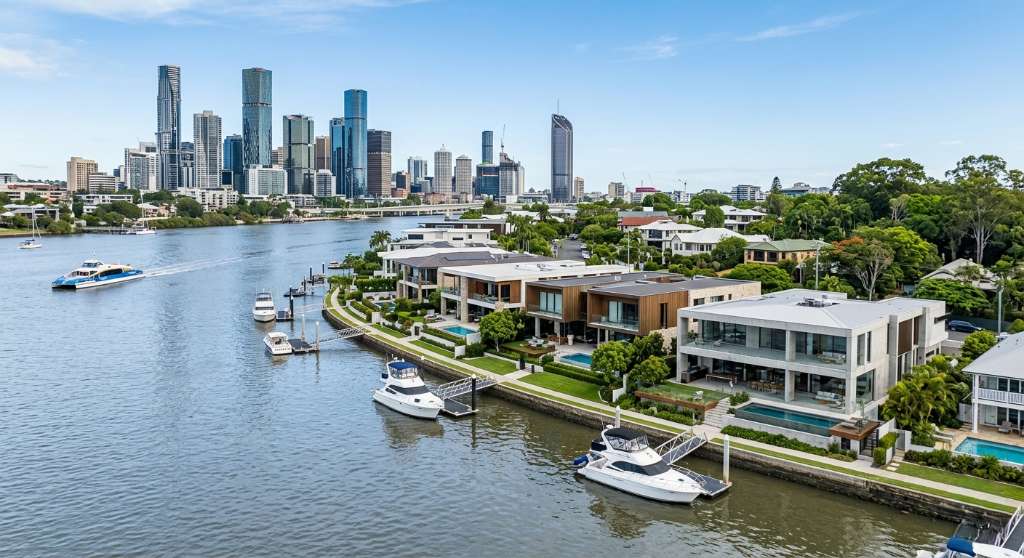
A residential street in an Australian suburb representing the housing market.
Smart summary
A growing debate surrounding the potential implementation of a mansion tax on high-value properties has sparked significant discussion among experts and homeowners across Australia.
The idea of introducing a “mansion tax” in Australia has sparked fresh debate as policymakers and economists explore ways to address housing affordability, wealth inequality, and broader tax reform. The concept, already used in several overseas jurisdictions, would impose additional taxes on owners of high-value residential properties.
The discussion comes amid growing concern over Australia's housing market, where property values have risen dramatically over the past decade. In Brisbane's affluent riverside suburb of Bulimba, where median house prices exceed $2 million, residents have expressed mixed views about whether owners of luxury homes should contribute more through taxation.
Two main models have emerged internationally. One approach imposes an additional tax when a property above a specified value threshold is bought or sold. Another model applies an annual charge to properties whose value exceeds a certain level, functioning similarly to an ongoing land or wealth tax. Both systems are already used in various forms overseas and are now being examined by Australian policy experts.
Among supporters of the proposal is tax policy expert Robert Breunig, who argues that a substantial proportion of Australia's household wealth is concentrated in owner-occupied housing that receives relatively favourable tax treatment. He suggests an annual property-based tax could potentially replace inefficient taxes such as stamp duty while improving housing market mobility.
Advocates believe a mansion tax could help address intergenerational inequality by ensuring owners of extremely valuable properties contribute more to public finances. They argue that younger Australians face increasing barriers to home ownership while older generations often hold significant untaxed housing wealth accumulated through rising property values.
However, the proposal faces strong opposition from parts of the property industry and some homeowners. Critics argue that property owners already pay substantial taxes and that introducing additional levies could discourage investment, reduce housing supply, or place financial pressure on retirees living in homes that have appreciated significantly over time.
Property industry representatives have also questioned whether taxing expensive homes would meaningfully improve housing affordability. They contend that Australia's primary housing challenge remains a shortage of supply and that policies encouraging construction would be more effective than introducing new taxes.
The debate is occurring alongside broader discussions about Australia's tax system. Economists, government advisers, and industry groups have increasingly questioned whether existing arrangements—including stamp duty, land taxes, and investment incentives—remain suitable for a rapidly changing housing market. Recent economic policy discussions have highlighted the need for long-term reforms that balance fairness, efficiency, and housing accessibility.
While no formal national mansion tax proposal has been adopted, the concept is gaining attention as governments search for ways to address housing affordability and wealth distribution challenges. Whether Australia ultimately embraces such a measure remains uncertain, but the debate reflects growing pressure to reconsider how housing wealth is taxed in one of the world's most expensive residential property markets.
HousingPropertyWealthTaxesDebate
The idea of introducing a “mansion tax” in Australia has sparked fresh debate as policymakers and economists explore ways to address housing affordability, wealth inequality, and broader tax reform. The concept, already used in several overseas jurisdictions, would impose additional taxes on owners of high-value residential properties.
The discussion comes amid growing concern over Australia's housing market, where property values have risen dramatically over the past decade. In Brisbane's affluent riverside suburb of Bulimba, where median house prices exceed $2 million, residents have expressed mixed views about whether owners of luxury homes should contribute more through taxation.
Two main models have emerged internationally. One approach imposes an additional tax when a property above a specified value threshold is bought or sold. Another model applies an annual charge to properties whose value exceeds a certain level, functioning similarly to an ongoing land or wealth tax. Both systems are already used in various forms overseas and are now being examined by Australian policy experts.
Among supporters of the proposal is tax policy expert Robert Breunig, who argues that a substantial proportion of Australia's household wealth is concentrated in owner-occupied housing that receives relatively favourable tax treatment. He suggests an annual property-based tax could potentially replace inefficient taxes such as stamp duty while improving housing market mobility.
Advocates believe a mansion tax could help address intergenerational inequality by ensuring owners of extremely valuable properties contribute more to public finances. They argue that younger Australians face increasing barriers to home ownership while older generations often hold significant untaxed housing wealth accumulated through rising property values.
However, the proposal faces strong opposition from parts of the property industry and some homeowners. Critics argue that property owners already pay substantial taxes and that introducing additional levies could discourage investment, reduce housing supply, or place financial pressure on retirees living in homes that have appreciated significantly over time.
Property industry representatives have also questioned whether taxing expensive homes would meaningfully improve housing affordability. They contend that Australia's primary housing challenge remains a shortage of supply and that policies encouraging construction would be more effective than introducing new taxes.
The debate is occurring alongside broader discussions about Australia's tax system. Economists, government advisers, and industry groups have increasingly questioned whether existing arrangements—including stamp duty, land taxes, and investment incentives—remain suitable for a rapidly changing housing market. Recent economic policy discussions have highlighted the need for long-term reforms that balance fairness, efficiency, and housing accessibility.
While no formal national mansion tax proposal has been adopted, the concept is gaining attention as governments search for ways to address housing affordability and wealth distribution challenges. Whether Australia ultimately embraces such a measure remains uncertain, but the debate reflects growing pressure to reconsider how housing wealth is taxed in one of the world's most expensive residential property markets.
Darwin Northern Territory · Other News · 01 Sep 2026
A scenic hike through Butterfly Gorge in the Northern Territory turned into a frightening experience when a buffalo charged at two hikers. ABC Darwin reported the story today, 1...
Coffs Harbour New South Wales · Other News · 01 Sep 2026
A Safe Work NSW inspection blitz across the Coffs Harbour region has uncovered dozens of workplace-safety issues in the horticulture industry. The operation followed concerns ab...
A major Queensland Government infrastructure investment is set to unlock thousands of new homes across the Fraser Coast, including projects in Maryborough.
The Queensland Police Service is facing scrutiny over conditions inside the state’s watch houses after Workplace Health and Safety Queensland issued multiple regulatory notices....
Queensland Police are investigating allegations of a serious se-xual offence connected to a private rehabilitation clinic in Queensland. The investigation has attracted attentio...
Detectives from the Upper Mt Gravatt Criminal Investigation Branch have charged two more people in connection with a fatal traffic crash that occurred in Runcorn on Sunday, 28 J...
An investigation published on 1 September 2026 has raised serious questions about safety procedures at The Star Brisbane after reports that internal warnings about a safety flaw...
Queensland's emerging football prospects are coming together for a three-day Brisbane Lions State Academy showcase, giving young players an opportunity...
A Wavell Heights enrolled nurse has been charged with four counts of alleged sexual assault and one count of wilful exposure, with his professional regi...
A 24-year-old Carina Heights man has been charged with 36 offences following an investigation into alleged break-ins, vehicle offences and other propert...
Cairns Regional Council has unanimously voted to seek $400,000 in Queensland Government funding for a program designed to connect local businesses with the region’s growing film...
An automated external defibrillator and memorial plaque have been installed at Ellery Creek Big Hole following the death of disability advocate Ellen Fr...
Queensland firefighters spent several hours monitoring a significant grass fire at Mary Kinross Park in Bargara, near Bundaberg, after the blaze broke out on Wednesday evening....