Safety note: Admin approval is an initial review, not a guarantee that every detail is correct. Check important or urgent claims with official sources and report anything inaccurate or unsafe.
Source and credit: Contributor's own report
More Than One Million Tonnes of Fertiliser Imported as Iran War Disrupts Global Supply Chains
Smart summary
Australia has imported more than one million tonnes of fertiliser since the outbreak of the Iran war as governments, suppliers and farmers work to safeguard agricultural production against growing disruptions to globa...
Australia has imported more than one million tonnes of fertiliser since the outbreak of the Iran war as governments, suppliers and farmers work to safeguard agricultural production against growing disruptions to global supply chains. The imports come amid mounting concerns that the conflict and associated shipping disruptions in the Middle East could significantly impact fertiliser availability and drive up costs for Australian growers.
The war has placed extraordinary pressure on global fertiliser markets because many of the world's largest producers of urea, ammonia and other key agricultural nutrients are located in the Gulf region. The conflict has disrupted production and shipping routes through the Strait of Hormuz, one of the world's most important maritime trade corridors. Roughly one-third of global fertiliser trade normally passes through the waterway, making any interruption highly significant for agricultural economies worldwide.
Australia is particularly vulnerable because it relies heavily on imported fertiliser products. Industry analysts estimate the country imported approximately 3.8 million tonnes of urea during 2025, with much of that supply originating from or transiting through the Gulf region. Since the conflict began, fertiliser prices have surged dramatically, with some estimates indicating urea costs have increased by around 60 per cent. Agricultural organisations warn that the timing of the disruption is especially concerning because it coincides with critical planting periods across many farming regions. While existing stockpiles and recent imports have helped maintain supplies for now, uncertainty remains about future deliveries and pricing. Farmers are closely monitoring fertiliser availability as they make decisions about crop planting and production levels for the coming season.
The impact is already being felt across the agricultural sector. The Australian Bureau of Agricultural and Resource Economics and Sciences has forecast lower wheat production partly due to rising fertiliser costs and supply pressures linked to the conflict. Higher input costs are expected to place additional financial strain on growers already dealing with challenging seasonal conditions in some regions.
Industry experts note that fertiliser is one of the most important inputs in modern agriculture, directly influencing crop yields and food production. Significant shortages or sustained price increases can reduce planting activity and lower harvest volumes, potentially affecting both domestic food prices and export earnings. Global agencies have warned that prolonged disruptions could create broader food security concerns in vulnerable regions around the world.
Governments and industry groups have responded by seeking alternative suppliers and increasing efforts to diversify import sources. International markets, including China, have begun adjusting export policies to help stabilise supplies, while Australian authorities continue monitoring the situation closely.
Despite the challenges, agricultural leaders say Australia's immediate fertiliser requirements are currently being met through a combination of imports, existing inventories and alternative sourcing arrangements. However, they caution that continued instability in the Middle East could prolong market volatility and maintain upward pressure on price. As the Iran war continues to influence global trade flows, Australia's agricultural sector remains focused on securing the supplies needed to sustain crop production and protect food supply chains. The situation highlights the nation's reliance on international fertiliser markets and the broader vulnerability of global agriculture to geopolitical events occurring thousands of kilometres away.
FertiliserAgriculturalGlobalProductionSupply
Australia has imported more than one million tonnes of fertiliser since the outbreak of the Iran war as governments, suppliers and farmers work to safeguard agricultural production against growing disruptions to global supply chains. The imports come amid mounting concerns that the conflict and associated shipping disruptions in the Middle East could significantly impact fertiliser availability and drive up costs for Australian growers.
The war has placed extraordinary pressure on global fertiliser markets because many of the world's largest producers of urea, ammonia and other key agricultural nutrients are located in the Gulf region. The conflict has disrupted production and shipping routes through the Strait of Hormuz, one of the world's most important maritime trade corridors. Roughly one-third of global fertiliser trade normally passes through the waterway, making any interruption highly significant for agricultural economies worldwide.
Australia is particularly vulnerable because it relies heavily on imported fertiliser products. Industry analysts estimate the country imported approximately 3.8 million tonnes of urea during 2025, with much of that supply originating from or transiting through the Gulf region. Since the conflict began, fertiliser prices have surged dramatically, with some estimates indicating urea costs have increased by around 60 per cent. Agricultural organisations warn that the timing of the disruption is especially concerning because it coincides with critical planting periods across many farming regions. While existing stockpiles and recent imports have helped maintain supplies for now, uncertainty remains about future deliveries and pricing. Farmers are closely monitoring fertiliser availability as they make decisions about crop planting and production levels for the coming season.
The impact is already being felt across the agricultural sector. The Australian Bureau of Agricultural and Resource Economics and Sciences has forecast lower wheat production partly due to rising fertiliser costs and supply pressures linked to the conflict. Higher input costs are expected to place additional financial strain on growers already dealing with challenging seasonal conditions in some regions.
Industry experts note that fertiliser is one of the most important inputs in modern agriculture, directly influencing crop yields and food production. Significant shortages or sustained price increases can reduce planting activity and lower harvest volumes, potentially affecting both domestic food prices and export earnings. Global agencies have warned that prolonged disruptions could create broader food security concerns in vulnerable regions around the world.
Governments and industry groups have responded by seeking alternative suppliers and increasing efforts to diversify import sources. International markets, including China, have begun adjusting export policies to help stabilise supplies, while Australian authorities continue monitoring the situation closely.
Despite the challenges, agricultural leaders say Australia's immediate fertiliser requirements are currently being met through a combination of imports, existing inventories and alternative sourcing arrangements. However, they caution that continued instability in the Middle East could prolong market volatility and maintain upward pressure on price. As the Iran war continues to influence global trade flows, Australia's agricultural sector remains focused on securing the supplies needed to sustain crop production and protect food supply chains. The situation highlights the nation's reliance on international fertiliser markets and the broader vulnerability of global agriculture to geopolitical events occurring thousands of kilometres away.
Wagga Wagga New South Wales · Breaking News · 16 Sep 2026
Riverina Police have established a dedicated investigation, Strike Force Arctis, following a reported increase in serious property and violent offences across Wagga Wagga. The o...
A serious late-night collision on the Hume Highway in Sydney’s south-west has left several people injured, including children, with one man in critical...
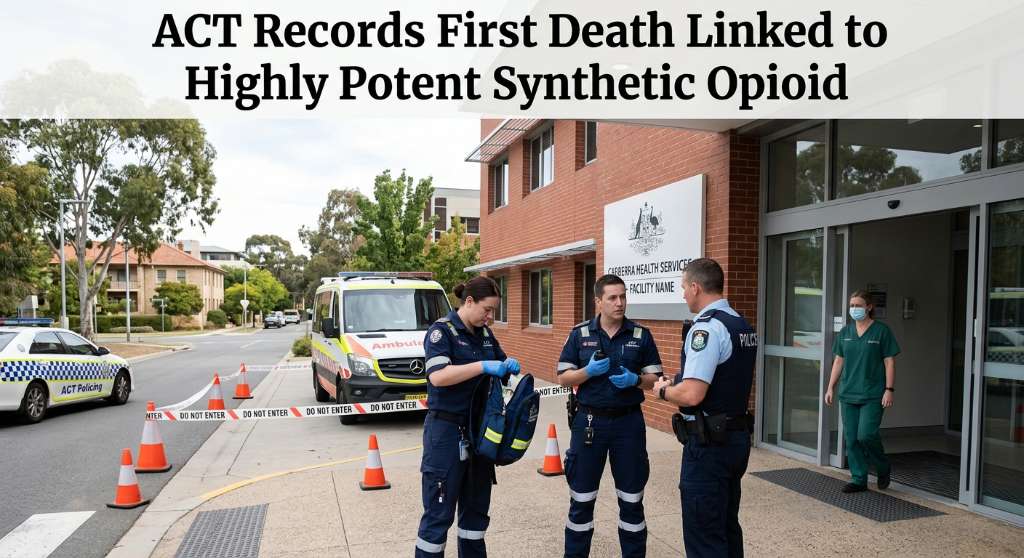
A Canberra woman has become the first person in the ACT whose death has been linked to a highly potent synthetic opioid, prompting renewed concern about...
Two teenagers have appeared in a Perth court after allegedly breaking into a crocodile enclosure and attacking the 400-kilogram reptile with a metal pole.
Cairns Regional Council has unanimously voted to seek $400,000 in Queensland Government funding for a program designed to connect local businesses with the region’s growing film...
An automated external defibrillator and memorial plaque have been installed at Ellery Creek Big Hole following the death of disability advocate Ellen Fr...
Queensland firefighters spent several hours monitoring a significant grass fire at Mary Kinross Park in Bargara, near Bundaberg, after the blaze broke out on Wednesday evening....