Gold Coast Police Open Up About the Hidden Trauma of Road Fatalities
By Neha Maurya · Published 06 Jun 2026 · Updated 06 Jun 2026
Gold Coast, Queensland · Queensland News
Safety note: Admin approval is an initial review, not a guarantee that every detail is correct. Check important or urgent claims with official sources and report anything inaccurate or unsafe.
Source and credit: Contributor's own report
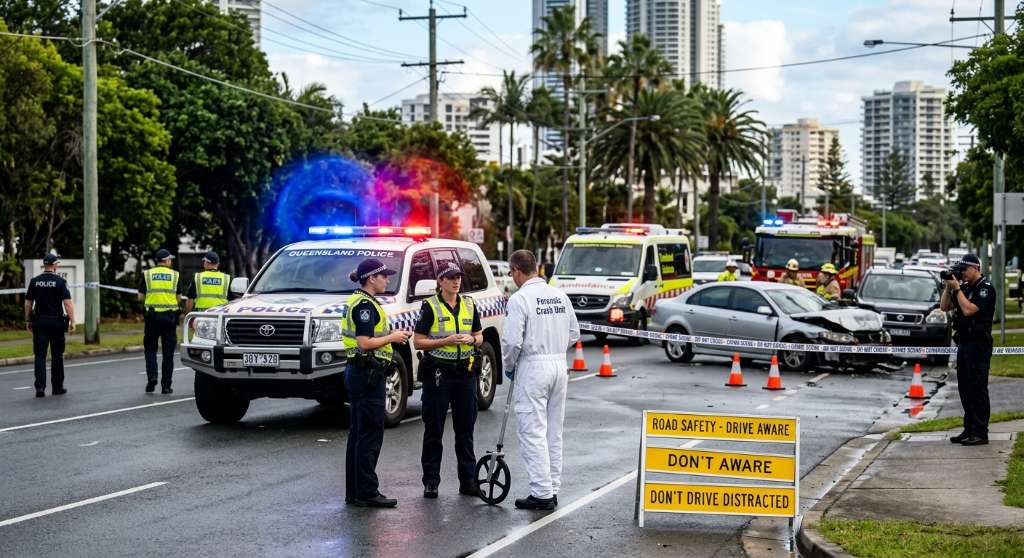
Queensland police vehicle on patrol in the Gold Coast region.
Smart summary
Queensland police officers have shared insights into the lasting emotional impact that fatal road accidents have on first responders and the wider community.
Queensland police officers have shared the often-unseen emotional burden carried by first responders who attend fatal road crashes, as the state's road toll continues to rise in 2026. Their accounts provide a powerful reminder that every road death affects not only victims and families but also the emergency personnel who are called upon to deal with the aftermath.
Leading the discussion is Gold Coast Highway Patrol and forensic crash investigation personnel who regularly attend some of the most confronting incidents on Queensland roads. They say the public often sees road toll statistics as numbers, but each fatality represents a person whose loss creates lasting trauma for families, friends, witnesses, healthcare workers, and police officers alike.
According to Queensland Police data referenced in the report, 137 people had lost their lives on Queensland roads so far in 2026, an increase of 21 deaths compared with the same period last year. On the Gold Coast, five road fatalities had been recorded at the time of publication.
Gold Coast forensic crash investigator Sergeant Shona Hartles described the emotional impact of attending fatal collisions, particularly when family members arrive at crash scenes. She explained that hearing the grief of loved ones is often one of the most difficult aspects of the job. Despite maintaining professionalism at scenes, officers frequently carry the emotional weight of these tragedies long after investigations have concluded.
Highway Patrol officer Leading Senior Constable Matt Redmond also reflected on incidents that have remained with him throughout his career. He recalled multiple fatal crashes involving young people and children, explaining that such events leave lasting memories for officers who are often among the first people to arrive. He noted that while the job can be emotionally challenging, police continue their work because they know families deserve answers and communities deserve safer roads.
Both officers emphasised that many serious crashes are preventable. They pointed to common contributing factors including speeding, drink driving, drug impairment, failure to wear seatbelts, and other risky behaviours. Investigators say that in most fatal incidents they attend, deliberate decisions made by road users contribute to the outcome rather than unavoidable circumstances.
Motorcyclists remain heavily overrepresented in Queensland's road toll. Police say many serious motorcycle crashes involve riders exceeding their skill levels or taking unnecessary risks on winding roads. The resulting injuries are often catastrophic and frequently fatal.
The report also highlights Operation Interpose, a Queensland Police road safety initiative focused on reducing road trauma through visible enforcement, roadside breath testing, and proactive policing. Authorities hope these efforts will encourage safer driving behaviour and ultimately reduce the number of lives lost on Queensland roads.
For officers like Hartles and Redmond, the goal remains simple: preventing tragedies before they occur. Their message is that every road death is one too many, and every driver has a responsibility to make safe decisions behind the wheel. The emotional toll carried by families, communities, and first responders serves as a stark reminder that road safety is not just about statistics—it is about protecting lives.
RoadPoliceQueenslandOfficersFatal
Queensland police officers have shared the often-unseen emotional burden carried by first responders who attend fatal road crashes, as the state's road toll continues to rise in 2026. Their accounts provide a powerful reminder that every road death affects not only victims and families but also the emergency personnel who are called upon to deal with the aftermath.
Leading the discussion is Gold Coast Highway Patrol and forensic crash investigation personnel who regularly attend some of the most confronting incidents on Queensland roads. They say the public often sees road toll statistics as numbers, but each fatality represents a person whose loss creates lasting trauma for families, friends, witnesses, healthcare workers, and police officers alike.
According to Queensland Police data referenced in the report, 137 people had lost their lives on Queensland roads so far in 2026, an increase of 21 deaths compared with the same period last year. On the Gold Coast, five road fatalities had been recorded at the time of publication.
Gold Coast forensic crash investigator Sergeant Shona Hartles described the emotional impact of attending fatal collisions, particularly when family members arrive at crash scenes. She explained that hearing the grief of loved ones is often one of the most difficult aspects of the job. Despite maintaining professionalism at scenes, officers frequently carry the emotional weight of these tragedies long after investigations have concluded.
Highway Patrol officer Leading Senior Constable Matt Redmond also reflected on incidents that have remained with him throughout his career. He recalled multiple fatal crashes involving young people and children, explaining that such events leave lasting memories for officers who are often among the first people to arrive. He noted that while the job can be emotionally challenging, police continue their work because they know families deserve answers and communities deserve safer roads.
Both officers emphasised that many serious crashes are preventable. They pointed to common contributing factors including speeding, drink driving, drug impairment, failure to wear seatbelts, and other risky behaviours. Investigators say that in most fatal incidents they attend, deliberate decisions made by road users contribute to the outcome rather than unavoidable circumstances.
Motorcyclists remain heavily overrepresented in Queensland's road toll. Police say many serious motorcycle crashes involve riders exceeding their skill levels or taking unnecessary risks on winding roads. The resulting injuries are often catastrophic and frequently fatal.
The report also highlights Operation Interpose, a Queensland Police road safety initiative focused on reducing road trauma through visible enforcement, roadside breath testing, and proactive policing. Authorities hope these efforts will encourage safer driving behaviour and ultimately reduce the number of lives lost on Queensland roads.
For officers like Hartles and Redmond, the goal remains simple: preventing tragedies before they occur. Their message is that every road death is one too many, and every driver has a responsibility to make safe decisions behind the wheel. The emotional toll carried by families, communities, and first responders serves as a stark reminder that road safety is not just about statistics—it is about protecting lives.
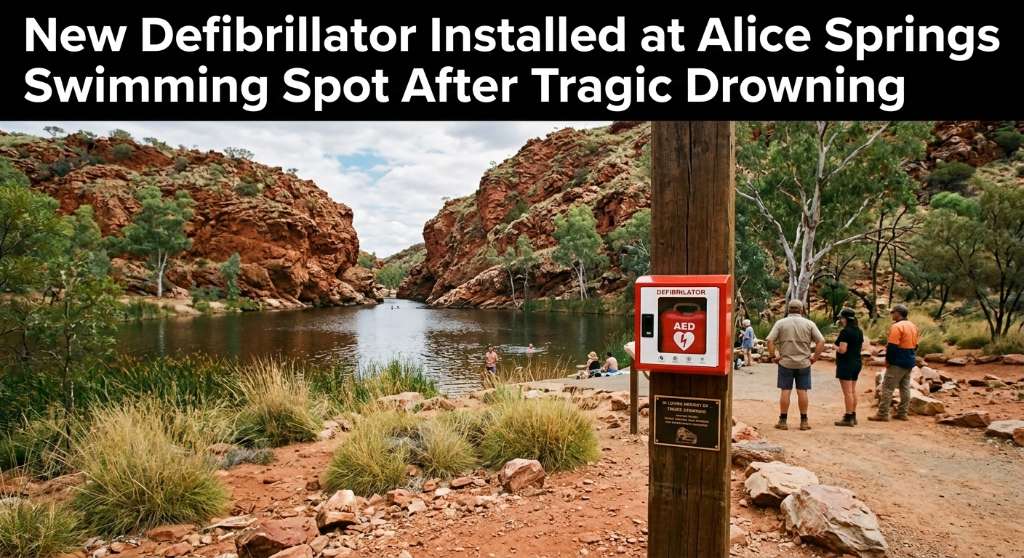
An automated external defibrillator and memorial plaque have been installed at Ellery Creek Big Hole following the death of disability advocate Ellen Fr...
Bathurst New South Wales · Community News · 17 Sep 2026
Kerry “Pecky” Peck, a long-standing Bathurst radio personality, has been inducted into the Bathurst Business Hall of Fame in recognition of his extensive contribution to the loc...
A new specialist family-violence support model has been introduced in Ballarat, with dedicated workers now embedded alongside Victoria Police to help people experiencing family...
Orange New South Wales · Community News · 17 Sep 2026
Orange City Council has elected a new Deputy Mayor for the next two years, with the decision announced today, 17 September 2026. The council said the election took place during...
The Gold Coast is set to build excitement for one of Queensland’s biggest annual sporting events, with Supercars announcing a free community launch event ahead of the 2026 Boost...
A former boarding student at The Southport School (TSS) on the Gold Coast has made serious allegations concerning his experiences at the prestigious Queensland school in the ear...
Gold Coast Queensland · Community News · 07 Sep 2026
Queensland authorities have suspended 39 working-with-children blue cards since the state’s new reportable-conduct scheme began, with more than 660 complaints recorded under the...
Gold Coast Queensland · Entertainment News · 07 Sep 2026
The Gold Coast is hosting a new production of Mamma Mia!, with The Very Popular Theatre Company bringing the ABBA-filled musical to audiences at The Star Gold Coast in Broadbeac...
Queensland's emerging football prospects are coming together for a three-day Brisbane Lions State Academy showcase, giving young players an opportunity...
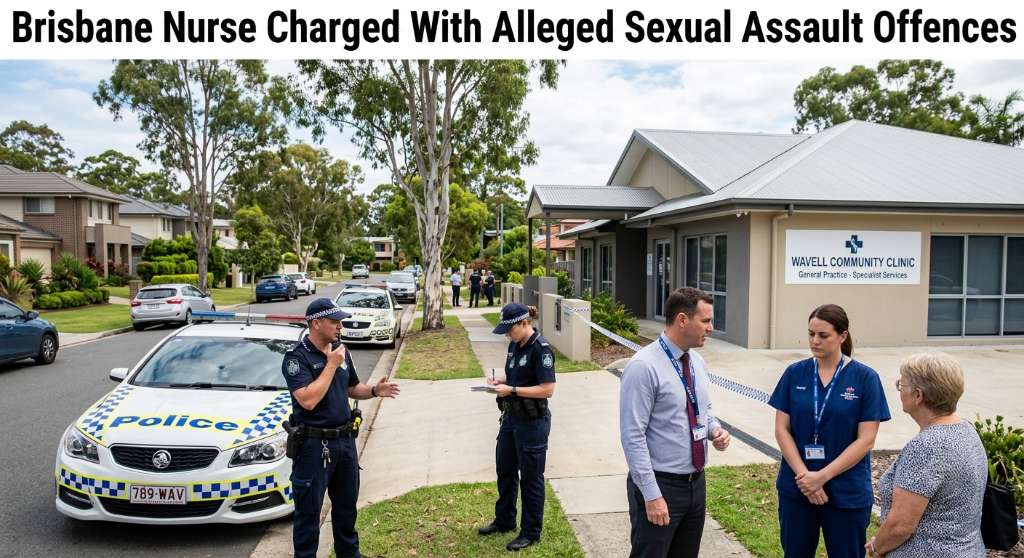
A Wavell Heights enrolled nurse has been charged with four counts of alleged sexual assault and one count of wilful exposure, with his professional regi...
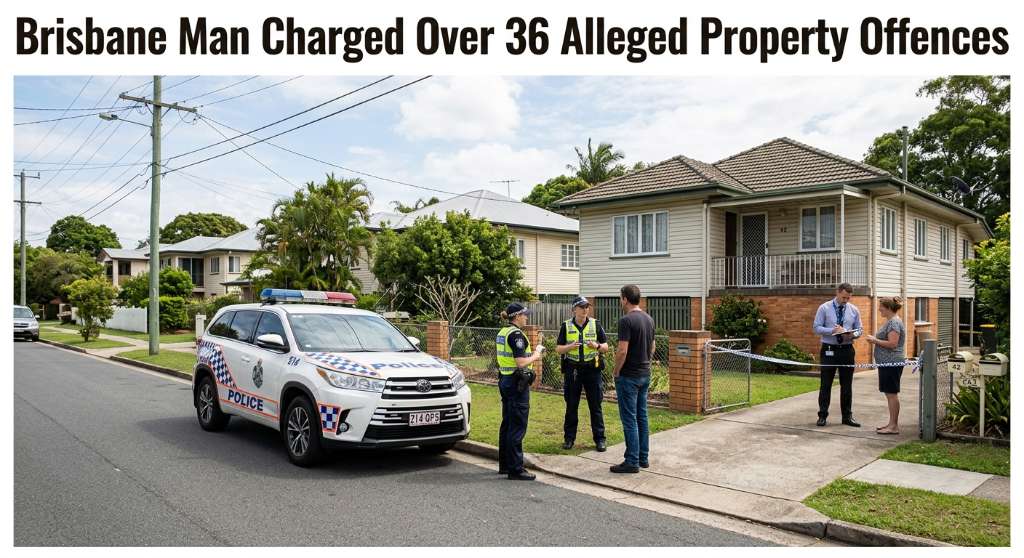
A 24-year-old Carina Heights man has been charged with 36 offences following an investigation into alleged break-ins, vehicle offences and other propert...
Cairns Regional Council has unanimously voted to seek $400,000 in Queensland Government funding for a program designed to connect local businesses with the region’s growing film...
An automated external defibrillator and memorial plaque have been installed at Ellery Creek Big Hole following the death of disability advocate Ellen Fr...
Queensland firefighters spent several hours monitoring a significant grass fire at Mary Kinross Park in Bargara, near Bundaberg, after the blaze broke out on Wednesday evening....