Safety note: Admin approval is an initial review, not a guarantee that every detail is correct. Check important or urgent claims with official sources and report anything inaccurate or unsafe.
Source and credit: Contributor's own report
Queensland Falls Behind South Australia and Western Australia in Global Mining Rankings
Smart summary
Queensland has slipped behind both South Australia and Western Australia as one of the world's most attractive destinations for mining investment, according to a newly released global mining survey. The findings have...
Queensland has slipped behind both South Australia and Western Australia as one of the world's most attractive destinations for mining investment, according to a newly released global mining survey. The findings have reignited debate over the state's mining policies, particularly its controversial coal royalty regime introduced in 2022. The annual Fraser Institute mining investment survey ranked South Australia as the highest-performing Australian jurisdiction, placing fourth globally, while Western Australia secured sixth place.
Queensland ranked 13th, remaining among the world's leading mining regions but trailing its interstate competitors. The rankings assess both geological potential and government policy settings that influence investor confidence. Industry leaders argue Queensland's decline is largely linked to its coal royalty structure, which imposes some of the highest effective royalty rates in the world.
Mining companies have repeatedly warned that elevated taxes reduce competitiveness and discourage future investment, particularly when companies can choose to invest in alternative jurisdictions with lower operating costs and more predictable policy environments. The Queensland Resources Council and other industry groups have expressed concern that the state's current approach could have long-term consequences for employment, regional economies and future project development. According to industry figures, several mining companies have either scaled back operations, delayed investments or entered financial difficulties since the royalty changes were implemented.
Mining employment has also reportedly fallen significantly in recent years, adding to concerns about the sector's future direction. Despite these challenges, Queensland remains a major force in Australia's resources sector. The state continues to benefit from substantial coal, critical minerals and emerging energy resources projects.
Large-scale developments such as the Copper String transmission project and critical minerals processing initiatives in North Queensland are expected to support future growth and diversification within the mining industry. South Australia's strong performance was driven by its highly rated geological potential, supportive exploration environment and internationally recognised geological database. Western Australia also maintained a strong position due to its established mining infrastructure, extensive resource base and reputation for regulatory stability.
Queensland Premier David Crisafulli has acknowledged industry concerns but has so far indicated that major changes to the royalty system are unlikely in the immediate future, with existing revenue projections remaining a key component of the state's budget planning. Nevertheless, mining industry representatives continue to call for an independent review of the royalty framework to improve Queensland's competitiveness and attract new investment. The latest rankings highlight the increasingly competitive nature of global mining investment, where government policy, taxation settings and regulatory certainty play a critical role alongside resource potential.
While Queensland remains an important mining powerhouse, the survey suggests that maintaining its long-term position will require careful balancing of revenue generation with policies that encourage investment, job creation and sustainable growth across regional communities.
MiningQueenslandIndustryInvestmentRoyalty
Queensland has slipped behind both South Australia and Western Australia as one of the world's most attractive destinations for mining investment, according to a newly released global mining survey. The findings have reignited debate over the state's mining policies, particularly its controversial coal royalty regime introduced in 2022. The annual Fraser Institute mining investment survey ranked South Australia as the highest-performing Australian jurisdiction, placing fourth globally, while Western Australia secured sixth place.
Queensland ranked 13th, remaining among the world's leading mining regions but trailing its interstate competitors. The rankings assess both geological potential and government policy settings that influence investor confidence. Industry leaders argue Queensland's decline is largely linked to its coal royalty structure, which imposes some of the highest effective royalty rates in the world.
Mining companies have repeatedly warned that elevated taxes reduce competitiveness and discourage future investment, particularly when companies can choose to invest in alternative jurisdictions with lower operating costs and more predictable policy environments. The Queensland Resources Council and other industry groups have expressed concern that the state's current approach could have long-term consequences for employment, regional economies and future project development. According to industry figures, several mining companies have either scaled back operations, delayed investments or entered financial difficulties since the royalty changes were implemented.
Mining employment has also reportedly fallen significantly in recent years, adding to concerns about the sector's future direction. Despite these challenges, Queensland remains a major force in Australia's resources sector. The state continues to benefit from substantial coal, critical minerals and emerging energy resources projects.
Large-scale developments such as the Copper String transmission project and critical minerals processing initiatives in North Queensland are expected to support future growth and diversification within the mining industry. South Australia's strong performance was driven by its highly rated geological potential, supportive exploration environment and internationally recognised geological database. Western Australia also maintained a strong position due to its established mining infrastructure, extensive resource base and reputation for regulatory stability.
Queensland Premier David Crisafulli has acknowledged industry concerns but has so far indicated that major changes to the royalty system are unlikely in the immediate future, with existing revenue projections remaining a key component of the state's budget planning. Nevertheless, mining industry representatives continue to call for an independent review of the royalty framework to improve Queensland's competitiveness and attract new investment. The latest rankings highlight the increasingly competitive nature of global mining investment, where government policy, taxation settings and regulatory certainty play a critical role alongside resource potential.
While Queensland remains an important mining powerhouse, the survey suggests that maintaining its long-term position will require careful balancing of revenue generation with policies that encourage investment, job creation and sustainable growth across regional communities.
Darwin Northern Territory · Other News · 01 Sep 2026
A scenic hike through Butterfly Gorge in the Northern Territory turned into a frightening experience when a buffalo charged at two hikers. ABC Darwin reported the story today, 1...
Coffs Harbour New South Wales · Other News · 01 Sep 2026
A Safe Work NSW inspection blitz across the Coffs Harbour region has uncovered dozens of workplace-safety issues in the horticulture industry. The operation followed concerns ab...
A major Queensland Government infrastructure investment is set to unlock thousands of new homes across the Fraser Coast, including projects in Maryborough.
Queensland's emerging football prospects are coming together for a three-day Brisbane Lions State Academy showcase, giving young players an opportunity...
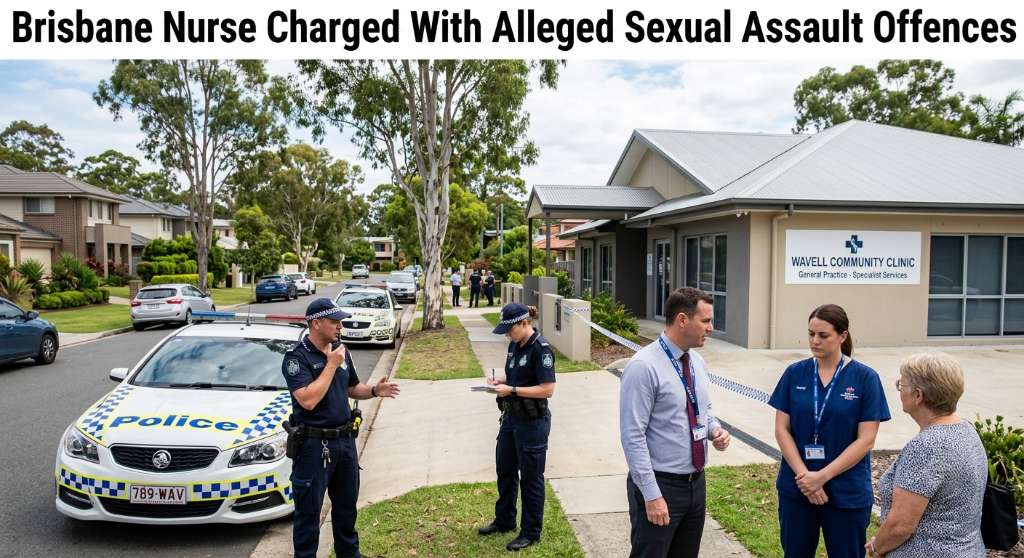
A Wavell Heights enrolled nurse has been charged with four counts of alleged sexual assault and one count of wilful exposure, with his professional regi...
A 24-year-old Carina Heights man has been charged with 36 offences following an investigation into alleged break-ins, vehicle offences and other propert...
Cairns Regional Council has unanimously voted to seek $400,000 in Queensland Government funding for a program designed to connect local businesses with the region’s growing film...
An automated external defibrillator and memorial plaque have been installed at Ellery Creek Big Hole following the death of disability advocate Ellen Fr...
Queensland firefighters spent several hours monitoring a significant grass fire at Mary Kinross Park in Bargara, near Bundaberg, after the blaze broke out on Wednesday evening....