Safety note: Admin approval is an initial review, not a guarantee that every detail is correct. Check important or urgent claims with official sources and report anything inaccurate or unsafe.
Source and credit: Contributor's own report
Queensland government seeks expanded powers to acquire private land for major projects - Brisbane, QLD
Smart summary
Queensland Deputy Premier Jarrod Bleijie is backing proposed changes that would expand government powers to acquire private land for projects considered strategically important, including critical minerals and major d...
The Queensland government is moving ahead with proposed changes that would give the state greater authority to acquire private land for major projects deemed important to the state’s future economic development.
The reforms, introduced by Deputy Premier and State Development Minister Jarrod Bleijie, are aimed at speeding up approvals for large-scale developments, particularly in sectors such as critical minerals, resources, infrastructure and eco-tourism. The government argues that faster decision-making is needed to attract investment, create jobs and strengthen Queensland’s economy.
Under the proposed framework, projects could be declared “State Strategic Projects”, creating a streamlined pathway for developments considered to have significant economic importance. The legislation proposes changes to the State Development and Public Works Organisation Act 1971, including new powers to improve project coordination and reduce delays in approvals.
The government says the changes are designed to remove unnecessary obstacles that can slow major investments. It argues that Queensland needs stronger pathways to develop industries such as critical minerals, which are increasingly important for global manufacturing, renewable technologies and supply chains.
However, the proposed powers have sparked strong opposition from critics who argue they give too much authority to the state government and could weaken protections for private property owners.
Queensland opposition figures have raised concerns that the reforms could allow compulsory acquisition of private land with limited ability for affected owners to appeal. They argue that while governments have traditionally had compulsory acquisition powers for projects such as roads and public infrastructure, expanding those powers to broader categories of development creates risks for landholders.
Environmental and heritage groups have also questioned parts of the proposal, particularly concerns that some projects could receive accelerated approval pathways that reduce existing assessment processes. Critics say economic development should not come at the expense of environmental protection or community consultation.
The government has rejected claims that the reforms remove safeguards. Mr Bleijie has argued that appropriate checks and consultation processes will remain in place and that the changes are intended to provide certainty for investors while protecting Queensland communities.
The proposed legislation is being examined through the Queensland Parliament committee process. The State Development and Public Works Organisation (Critical Minerals) and Other Legislation Amendment Bill 2026 has been referred for detailed consideration, with submissions and hearings forming part of the review process.
Supporters of the reforms say Queensland must compete with other regions globally for investment and infrastructure projects. They argue that lengthy approval processes can delay projects that could provide employment opportunities and economic benefits, especially in regional areas.
Opponents say the balance between development and individual property rights must be carefully considered. They believe landholders should retain strong legal protections and the ability to challenge government decisions affecting their homes, farms or businesses.
The debate highlights a broader challenge facing governments across Australia: how to accelerate major economic projects while maintaining public confidence, environmental responsibility and fair treatment of private landowners.
ProjectsQueenslandDevelopmentGovernmentState
The Queensland government is moving ahead with proposed changes that would give the state greater authority to acquire private land for major projects deemed important to the state’s future economic development.
The reforms, introduced by Deputy Premier and State Development Minister Jarrod Bleijie, are aimed at speeding up approvals for large-scale developments, particularly in sectors such as critical minerals, resources, infrastructure and eco-tourism. The government argues that faster decision-making is needed to attract investment, create jobs and strengthen Queensland’s economy.
Under the proposed framework, projects could be declared “State Strategic Projects”, creating a streamlined pathway for developments considered to have significant economic importance. The legislation proposes changes to the State Development and Public Works Organisation Act 1971, including new powers to improve project coordination and reduce delays in approvals.
The government says the changes are designed to remove unnecessary obstacles that can slow major investments. It argues that Queensland needs stronger pathways to develop industries such as critical minerals, which are increasingly important for global manufacturing, renewable technologies and supply chains.
However, the proposed powers have sparked strong opposition from critics who argue they give too much authority to the state government and could weaken protections for private property owners.
Queensland opposition figures have raised concerns that the reforms could allow compulsory acquisition of private land with limited ability for affected owners to appeal. They argue that while governments have traditionally had compulsory acquisition powers for projects such as roads and public infrastructure, expanding those powers to broader categories of development creates risks for landholders.
Environmental and heritage groups have also questioned parts of the proposal, particularly concerns that some projects could receive accelerated approval pathways that reduce existing assessment processes. Critics say economic development should not come at the expense of environmental protection or community consultation.
The government has rejected claims that the reforms remove safeguards. Mr Bleijie has argued that appropriate checks and consultation processes will remain in place and that the changes are intended to provide certainty for investors while protecting Queensland communities.
The proposed legislation is being examined through the Queensland Parliament committee process. The State Development and Public Works Organisation (Critical Minerals) and Other Legislation Amendment Bill 2026 has been referred for detailed consideration, with submissions and hearings forming part of the review process.
Supporters of the reforms say Queensland must compete with other regions globally for investment and infrastructure projects. They argue that lengthy approval processes can delay projects that could provide employment opportunities and economic benefits, especially in regional areas.
Opponents say the balance between development and individual property rights must be carefully considered. They believe landholders should retain strong legal protections and the ability to challenge government decisions affecting their homes, farms or businesses.
The debate highlights a broader challenge facing governments across Australia: how to accelerate major economic projects while maintaining public confidence, environmental responsibility and fair treatment of private landowners.
The Federal Government is preparing new measures targeting temporary visas, visa overstayers, international students and visa-hopping, while maintaining...
One Nation’s proposed major reduction in migration has triggered warnings that a sharp cut to population growth could weaken Australia’s economy and cre...
Queensland's emerging football prospects are coming together for a three-day Brisbane Lions State Academy showcase, giving young players an opportunity...
A Wavell Heights enrolled nurse has been charged with four counts of alleged sexual assault and one count of wilful exposure, with his professional regi...
A 24-year-old Carina Heights man has been charged with 36 offences following an investigation into alleged break-ins, vehicle offences and other propert...
Cairns Regional Council has unanimously voted to seek $400,000 in Queensland Government funding for a program designed to connect local businesses with the region’s growing film...
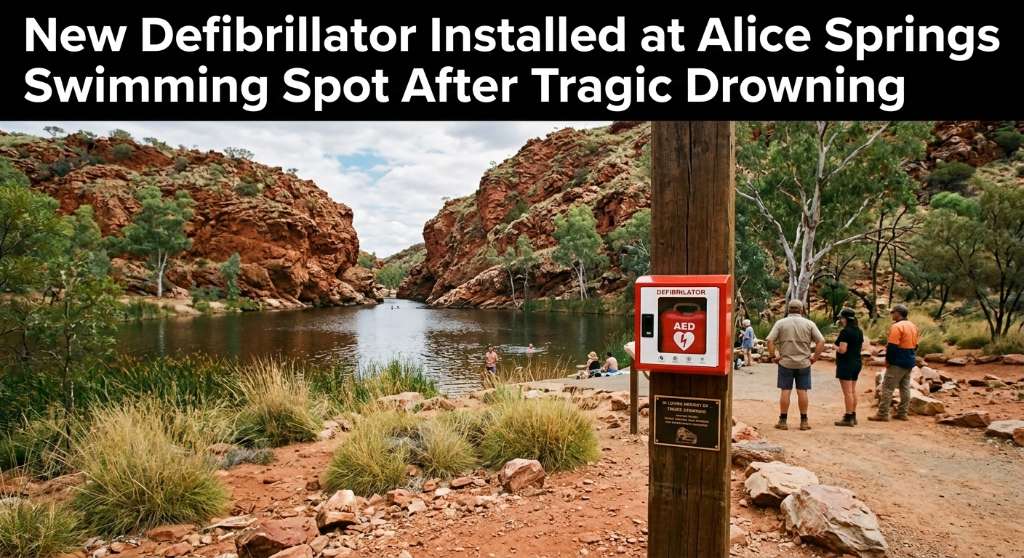
An automated external defibrillator and memorial plaque have been installed at Ellery Creek Big Hole following the death of disability advocate Ellen Fr...
Queensland firefighters spent several hours monitoring a significant grass fire at Mary Kinross Park in Bargara, near Bundaberg, after the blaze broke out on Wednesday evening....