Safety note: Admin approval is an initial review, not a guarantee that every detail is correct. Check important or urgent claims with official sources and report anything inaccurate or unsafe.
Source and credit: Contributor's own report
Ron Finemore Examines the Future Transition to Heavy Electric Vehicles in Transport Industry - Wodonga, NSW
Smart summary
Transport industry veteran Ron Finemore has shared his views on the challenges and opportunities involved in moving Australia's heavy vehicle sector towards electric trucks and cleaner transport technologies.
Australian transport leader Ron Finemore has highlighted the major challenges facing the freight industry as it begins the transition from traditional diesel-powered trucks to heavy electric vehicles.
The shift towards electric trucks is expected to play an important role in reducing emissions from Australia's transport sector, but industry leaders say the transition will require careful planning, investment in charging infrastructure and technology that can meet the demanding needs of long-distance freight operations.
Ron Finemore, founder and executive chairman of Ron Finemore Transport, has spent decades building one of Australia's major freight companies. The business operates a large modern fleet servicing essential supply chains across Australia, including food, fuel and other critical goods.
Heavy vehicles present a different challenge compared with passenger cars because trucks often travel long distances, carry significant loads and require reliable operation around the clock. For transport operators, the move to electric power will depend on factors including vehicle range, charging availability, operating costs and the ability to maintain delivery schedules.
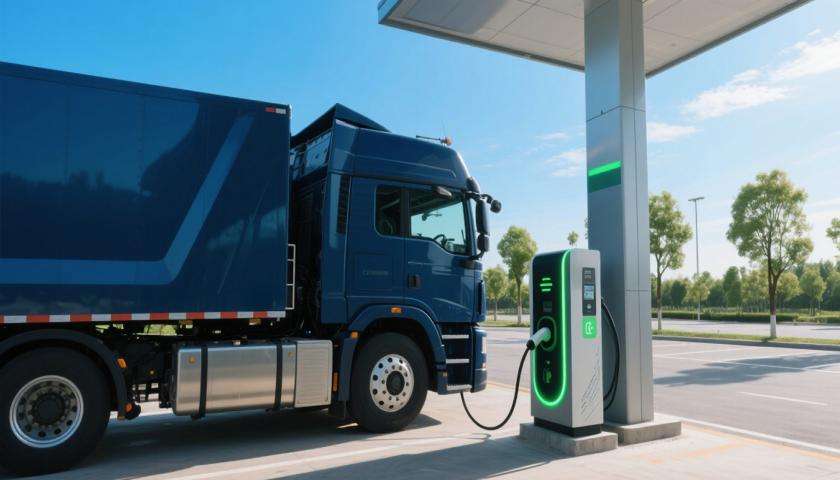
Industry experts say electric heavy vehicles are developing quickly, but widespread adoption will require a major expansion of charging networks capable of supporting large trucks. Long-haul freight routes will need dedicated charging solutions, reliable energy supply and infrastructure that allows operators to keep vehicles productive.
For companies such as Ron Finemore Transport, fleet reliability and safety remain key priorities. The company has traditionally focused on operating modern trucks equipped with advanced safety technology and maintaining efficient logistics operations across regional and metropolitan Australia.
The transition to electric trucks may also require changes in government policy, industry regulation and financial support. Transport industry groups have argued that incentives, improved charging infrastructure and practical regulations will be needed to help operators adopt zero-emission heavy vehicles without affecting freight costs or supply chain reliability.
Another challenge is that heavy electric trucks currently have higher upfront costs compared with conventional diesel vehicles. While electric vehicles can offer lower running costs through reduced fuel and maintenance expenses, businesses must consider the initial investment and the availability of suitable charging facilities.
The future freight mix may also involve multiple technologies, including battery electric vehicles, hydrogen-powered trucks and other lower-emission solutions depending on the type of transport task. Industry representatives have noted that different solutions may be required for short-distance deliveries, regional freight and interstate long-haul operations.
The move towards cleaner heavy transport comes as governments and industries worldwide increase efforts to reduce transport emissions. However, freight operators continue to emphasise that the transition must be practical, affordable and supported by infrastructure development.
For regional transport companies, the challenge is balancing environmental goals with the need to keep essential goods moving efficiently. As one of Australia's experienced transport figures, Ron Finemore's perspective reflects the broader discussion occurring across the freight industry about how quickly and effectively heavy vehicles can transition to new energy technologies.
The coming years are expected to bring further trials, investment and innovation as manufacturers, governments and transport operators work together to develop the next generation of Australia's heavy vehicle fleet.
TransportVehiclesElectricFreightHeavy
Australian transport leader Ron Finemore has highlighted the major challenges facing the freight industry as it begins the transition from traditional diesel-powered trucks to heavy electric vehicles.
The shift towards electric trucks is expected to play an important role in reducing emissions from Australia's transport sector, but industry leaders say the transition will require careful planning, investment in charging infrastructure and technology that can meet the demanding needs of long-distance freight operations.
Ron Finemore, founder and executive chairman of Ron Finemore Transport, has spent decades building one of Australia's major freight companies. The business operates a large modern fleet servicing essential supply chains across Australia, including food, fuel and other critical goods.
Heavy vehicles present a different challenge compared with passenger cars because trucks often travel long distances, carry significant loads and require reliable operation around the clock. For transport operators, the move to electric power will depend on factors including vehicle range, charging availability, operating costs and the ability to maintain delivery schedules.
Industry experts say electric heavy vehicles are developing quickly, but widespread adoption will require a major expansion of charging networks capable of supporting large trucks. Long-haul freight routes will need dedicated charging solutions, reliable energy supply and infrastructure that allows operators to keep vehicles productive.
For companies such as Ron Finemore Transport, fleet reliability and safety remain key priorities. The company has traditionally focused on operating modern trucks equipped with advanced safety technology and maintaining efficient logistics operations across regional and metropolitan Australia.
The transition to electric trucks may also require changes in government policy, industry regulation and financial support. Transport industry groups have argued that incentives, improved charging infrastructure and practical regulations will be needed to help operators adopt zero-emission heavy vehicles without affecting freight costs or supply chain reliability.
Another challenge is that heavy electric trucks currently have higher upfront costs compared with conventional diesel vehicles. While electric vehicles can offer lower running costs through reduced fuel and maintenance expenses, businesses must consider the initial investment and the availability of suitable charging facilities.
The future freight mix may also involve multiple technologies, including battery electric vehicles, hydrogen-powered trucks and other lower-emission solutions depending on the type of transport task. Industry representatives have noted that different solutions may be required for short-distance deliveries, regional freight and interstate long-haul operations.
The move towards cleaner heavy transport comes as governments and industries worldwide increase efforts to reduce transport emissions. However, freight operators continue to emphasise that the transition must be practical, affordable and supported by infrastructure development.
For regional transport companies, the challenge is balancing environmental goals with the need to keep essential goods moving efficiently. As one of Australia's experienced transport figures, Ron Finemore's perspective reflects the broader discussion occurring across the freight industry about how quickly and effectively heavy vehicles can transition to new energy technologies.
The coming years are expected to bring further trials, investment and innovation as manufacturers, governments and transport operators work together to develop the next generation of Australia's heavy vehicle fleet.
Tesla is preparing to bring its driverless Cybercab to Australia for a preview, giving Australians an early look at the company’s autonomous vehicle tec...
A 15-year-old Pacific Lutheran College student has developed a privacy-first women’s health app and presented her work at a major national cyber event.
Greater Geelong Council wants data-centre operators to contribute to local infrastructure as community concerns grow over energy, water use and developm...
New workplace data shows staff absenteeism jumped sharply during the historic MCG NFL event, while Melbourne businesses also benefited from a major spen...
Cairns Regional Council has unanimously voted to seek $400,000 in Queensland Government funding for a program designed to connect local businesses with the region’s growing film...
An automated external defibrillator and memorial plaque have been installed at Ellery Creek Big Hole following the death of disability advocate Ellen Fr...
Queensland firefighters spent several hours monitoring a significant grass fire at Mary Kinross Park in Bargara, near Bundaberg, after the blaze broke out on Wednesday evening....