South Australian Mayor Faces Censure Vote After Workplace Misconduct Investigation
By Chloe · Published 23 Oct 2026 · Updated 23 Oct 2026
Robe, SA
Safety note: Admin approval is an initial review, not a guarantee that every detail is correct. Check important or urgent claims with official sources and report anything inaccurate or unsafe.
Source and credit: Contributor's own report
South Australian Mayor Faces Censure Vote After Workplace Misconduct Investigation - Robe, SA
Smart summary
An independent investigation has found that Robe Mayor Lisa Ruffell made allegedly undermining comments about council employees. She strongly disputes the findings and has raised concerns about the investigation process.
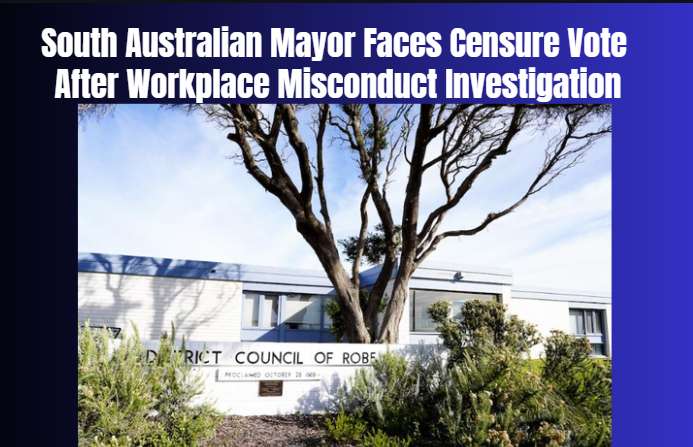
The mayor of Robe, a coastal town on South Australia's Limestone Coast, is facing a potential censure vote after an independent investigation examined complaints about her conduct towards council employees.
Mayor Lisa Ruffell has led the District Council of Robe since 2023. The investigation, conducted by independent lawyers from Kelledy Jones Lawyers, examined allegations that she undermined employees' professional reputations, contributed to workplace distress and created instability within the council. The findings were summarised in a report made public by the council this week.
Among the incidents detailed in the report was an alleged remark about a staff member during a community photo shoot for council grant recipients. The investigation found that Ruffell said the employee “needs to go back to netball and lose some weight”.
The report also described other alleged incidents in which council employees were criticised in public settings. During a meeting with state government representatives about an unrelated matter, the mayor allegedly told an employee that an asset could be repaired “if it wasn't for your big fat salary”.
Investigators also examined claims that Ruffell discussed confidential employment matters with community members. According to the summary, she allegedly described staff as “lazy” and suggested they did not do their jobs. The report further referred to behaviour during meetings that investigators characterised as dismissive, including rolling her eyes while employees were speaking, as well as emails described as rude and disrespectful.
The complaints led the council to commission an independent investigation in June. The matter had previously been referred to the local government Behavioural Standards Board, which recommended that independent lawyers be engaged to examine the allegations.
Ruffell was informed of the allegations in February and provided a response the following month. The investigation's findings have now moved the matter towards a formal decision by elected council members.
The mayor has strongly rejected the findings. She has raised concerns about the investigation's process and argued that the publicly available meeting documents contain only the investigator's summary rather than the full report. She has also disputed whether the evidence relied upon was adequately identified and whether adverse witness material was provided to her in full.
The council is expected to consider whether to censure Ruffell at a meeting scheduled for Monday night. Because of conflict-of-interest requirements, she is expected to be absent from the discussion and vote concerning the findings.
A censure is a formal expression of disapproval by an elected body. It is distinct from criminal prosecution and does not, by itself, mean that a person has been found guilty of a criminal offence. The council's decision will determine its immediate response to the investigation, although the longer-term consequences will depend on the applicable local-government procedures.
The case highlights the importance of professional conduct, confidentiality and respectful communication in local government. Council employees rely on appropriate workplace processes to raise concerns, while elected representatives are entitled to respond to allegations and challenge investigative procedures they believe are unfair.
The matter remains contested. The investigation's conclusions have been made public, but Ruffell continues to deny the allegations, and the council's forthcoming decision is the next significant development in the dispute.
CouncilInvestigationRuffellAllegationsEmployees
The mayor of Robe, a coastal town on South Australia's Limestone Coast, is facing a potential censure vote after an independent investigation examined complaints about her conduct towards council employees.
Mayor Lisa Ruffell has led the District Council of Robe since 2023. The investigation, conducted by independent lawyers from Kelledy Jones Lawyers, examined allegations that she undermined employees' professional reputations, contributed to workplace distress and created instability within the council. The findings were summarised in a report made public by the council this week.
Among the incidents detailed in the report was an alleged remark about a staff member during a community photo shoot for council grant recipients. The investigation found that Ruffell said the employee “needs to go back to netball and lose some weight”.
The report also described other alleged incidents in which council employees were criticised in public settings. During a meeting with state government representatives about an unrelated matter, the mayor allegedly told an employee that an asset could be repaired “if it wasn't for your big fat salary”.
Investigators also examined claims that Ruffell discussed confidential employment matters with community members. According to the summary, she allegedly described staff as “lazy” and suggested they did not do their jobs. The report further referred to behaviour during meetings that investigators characterised as dismissive, including rolling her eyes while employees were speaking, as well as emails described as rude and disrespectful.
The complaints led the council to commission an independent investigation in June. The matter had previously been referred to the local government Behavioural Standards Board, which recommended that independent lawyers be engaged to examine the allegations.
Ruffell was informed of the allegations in February and provided a response the following month. The investigation's findings have now moved the matter towards a formal decision by elected council members.
The mayor has strongly rejected the findings. She has raised concerns about the investigation's process and argued that the publicly available meeting documents contain only the investigator's summary rather than the full report. She has also disputed whether the evidence relied upon was adequately identified and whether adverse witness material was provided to her in full.
The council is expected to consider whether to censure Ruffell at a meeting scheduled for Monday night. Because of conflict-of-interest requirements, she is expected to be absent from the discussion and vote concerning the findings.
A censure is a formal expression of disapproval by an elected body. It is distinct from criminal prosecution and does not, by itself, mean that a person has been found guilty of a criminal offence. The council's decision will determine its immediate response to the investigation, although the longer-term consequences will depend on the applicable local-government procedures.
The case highlights the importance of professional conduct, confidentiality and respectful communication in local government. Council employees rely on appropriate workplace processes to raise concerns, while elected representatives are entitled to respond to allegations and challenge investigative procedures they believe are unfair.
The matter remains contested. The investigation's conclusions have been made public, but Ruffell continues to deny the allegations, and the council's forthcoming decision is the next significant development in the dispute.
Australian workers and industry representatives are calling for stronger action by the Australian Taxation Office after new reporting highlighted that a...
A last-minute Supreme Court injunction has halted plans to remove a large fig tree at Rex Smeal Park in Port Douglas after a local resident gathered mor...
A fresh protest has erupted in western Victoria over plans to duplicate a major highway, with Djab Wurrung people and supporters opposing the removal of...
An 85-year-old man who has worn pink every day in memory of his wife is raising awareness of breast cancer and the need for better support for people li...
Repeated satellite observations of methane emissions above the Gorgon liquefied natural gas facility have prompted a United Nations warning and an inves...
Two Colombian police departments say they have no record of operational cooperation with Australia's newly announced anti-drug taskforce, raising questi...
Several New South Wales MPs say a parliamentary security briefing left them anxious about how quickly security staff could respond to an incident, promp...
Australia's expanding battery storage capacity is reshaping the electricity market, storing renewable energy during the day and supplying power during p...
South Australia's civil and administrative tribunal has upheld a prohibition preventing a disability support worker from working with children and peopl...
Tasmania Police found that an artificial intelligence tool nearly halved the time needed to prepare family violence reports, but testing also revealed m...