Safety note: Admin approval is an initial review, not a guarantee that every detail is correct. Check important or urgent claims with official sources and report anything inaccurate or unsafe.
Source and credit: Contributor's own report
Tactical Frivolity: How Humour and Theatrics Are Reshaping Australian Protest Movements - Canberra, ACT
Smart summary
Activists across Australia are increasingly turning to 'tactical frivolity'—a protest strategy using humour, costumes, and performance—to engage the public and challenge authority.
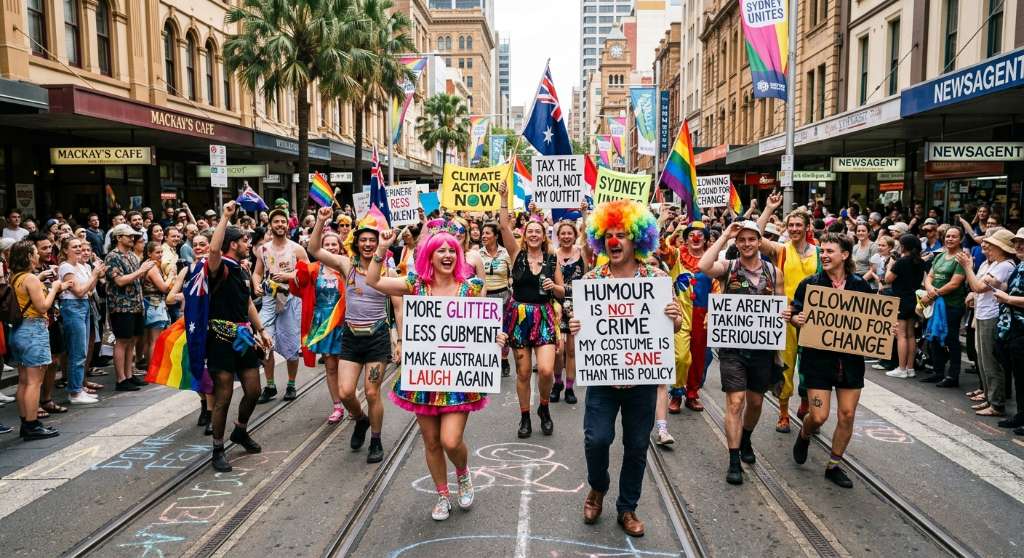
A growing number of activists across Australia are embracing a protest strategy known as “tactical frivolity.” This form of non-violent activism utilises humour, costumes, music, satire, and theatrical performances to attract attention and communicate political messages. Supporters argue that this approach makes activism more accessible, reduces tensions, and encourages broader public participation in civic life.
The concept has gained significant visibility through a series of creative demonstrations. Notably, protesters have utilised songs by Australian music icon John Farnham to challenge legislation regarding political slogans. These events, often featuring flash mobs and themed gatherings, have successfully drawn public and media attention while maintaining a peaceful atmosphere. Experts suggest that such methods rely on surprise and creativity rather than direct confrontation.
Historians note that this is not a new phenomenon, tracing similar forms of mockery back to medieval European traditions like “charivari.” In Australia, this style of activism has deep roots, reflecting a long-standing national tradition of political satire and irreverence. Historical examples include protesters marching backwards to circumvent bans and activists wearing unusual costumes to highlight government policy concerns.
In a recent Brisbane example, residents attended a local council meeting dressed as clowns to encourage civic engagement. Organisers reported that the event attracted many individuals who had never previously participated in local government proceedings, demonstrating how humour can lower the barrier to entry for political involvement. By making activism feel less intimidating, supporters believe these tactics foster a stronger sense of community.
However, experts caution that humour alone is rarely a substitute for sustained advocacy. While creative demonstrations are effective at increasing visibility and sparking public discussion, meaningful policy outcomes often require broader organisation and long-term political engagement. Critics sometimes argue that overly theatrical displays can distract from the core issues or fail to translate public interest into concrete action.
Despite these debates, tactical frivolity remains a popular tool for those seeking innovative ways to communicate their message. As social movements compete for attention in a crowded media landscape, the use of creativity and spectacle continues to evolve. Further details may be updated as more information becomes available regarding the long-term impact of these protest methods.
PoliticalActivismHumourTheseAttention
A growing number of activists across Australia are embracing a protest strategy known as “tactical frivolity.” This form of non-violent activism utilises humour, costumes, music, satire, and theatrical performances to attract attention and communicate political messages. Supporters argue that this approach makes activism more accessible, reduces tensions, and encourages broader public participation in civic life.
The concept has gained significant visibility through a series of creative demonstrations. Notably, protesters have utilised songs by Australian music icon John Farnham to challenge legislation regarding political slogans. These events, often featuring flash mobs and themed gatherings, have successfully drawn public and media attention while maintaining a peaceful atmosphere. Experts suggest that such methods rely on surprise and creativity rather than direct confrontation.
Historians note that this is not a new phenomenon, tracing similar forms of mockery back to medieval European traditions like “charivari.” In Australia, this style of activism has deep roots, reflecting a long-standing national tradition of political satire and irreverence. Historical examples include protesters marching backwards to circumvent bans and activists wearing unusual costumes to highlight government policy concerns.
In a recent Brisbane example, residents attended a local council meeting dressed as clowns to encourage civic engagement. Organisers reported that the event attracted many individuals who had never previously participated in local government proceedings, demonstrating how humour can lower the barrier to entry for political involvement. By making activism feel less intimidating, supporters believe these tactics foster a stronger sense of community.
However, experts caution that humour alone is rarely a substitute for sustained advocacy. While creative demonstrations are effective at increasing visibility and sparking public discussion, meaningful policy outcomes often require broader organisation and long-term political engagement. Critics sometimes argue that overly theatrical displays can distract from the core issues or fail to translate public interest into concrete action.
Despite these debates, tactical frivolity remains a popular tool for those seeking innovative ways to communicate their message. As social movements compete for attention in a crowded media landscape, the use of creativity and spectacle continues to evolve. Further details may be updated as more information becomes available regarding the long-term impact of these protest methods.
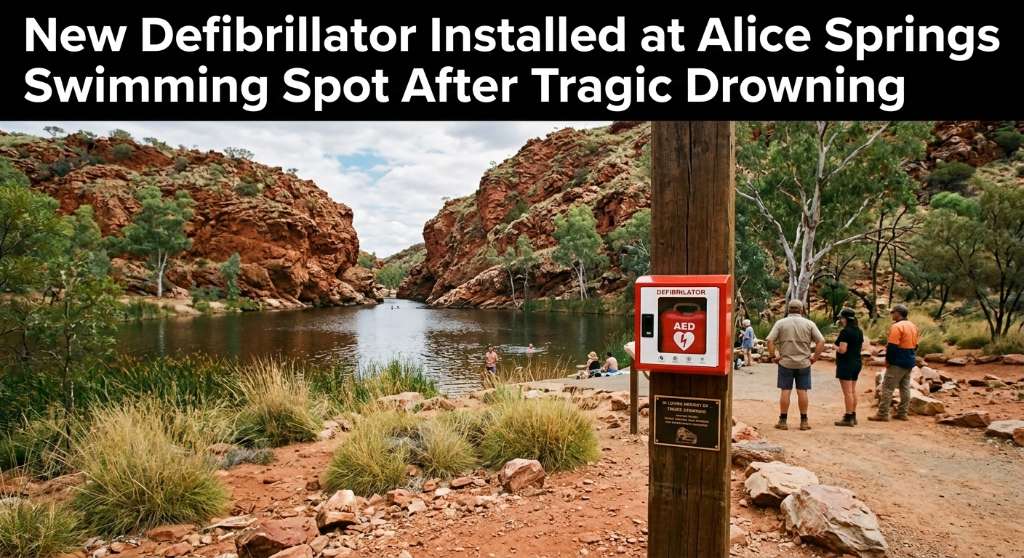
An automated external defibrillator and memorial plaque have been installed at Ellery Creek Big Hole following the death of disability advocate Ellen Fr...
Bathurst New South Wales · Community News · 17 Sep 2026
Kerry “Pecky” Peck, a long-standing Bathurst radio personality, has been inducted into the Bathurst Business Hall of Fame in recognition of his extensive contribution to the loc...
A new specialist family-violence support model has been introduced in Ballarat, with dedicated workers now embedded alongside Victoria Police to help people experiencing family...
Orange New South Wales · Community News · 17 Sep 2026
Orange City Council has elected a new Deputy Mayor for the next two years, with the decision announced today, 17 September 2026. The council said the election took place during...
The Federal Government is preparing new measures targeting temporary visas, visa overstayers, international students and visa-hopping, while maintaining...
One Nation’s proposed major reduction in migration has triggered warnings that a sharp cut to population growth could weaken Australia’s economy and cre...
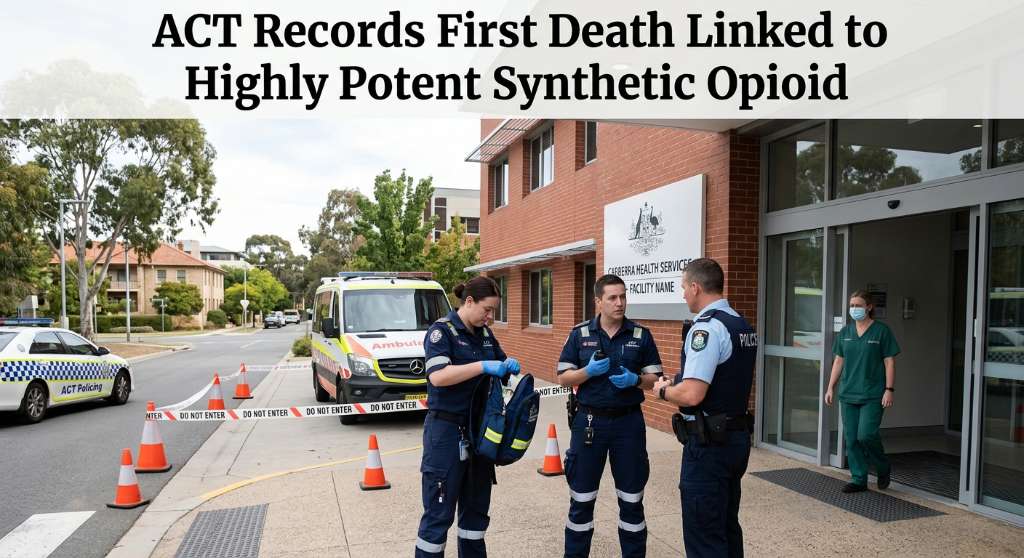
A Canberra woman has become the first person in the ACT whose death has been linked to a highly potent synthetic opioid, prompting renewed concern about...
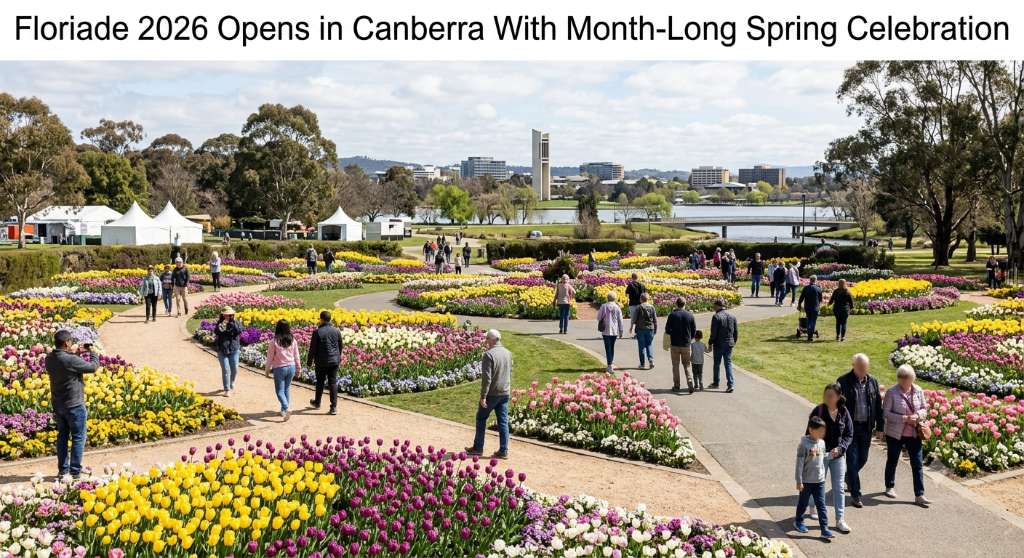
Canberra’s Commonwealth Park has welcomed visitors for the annual Floriade festival, bringing flowers, entertainment and spring activities to the city.
Cairns Regional Council has unanimously voted to seek $400,000 in Queensland Government funding for a program designed to connect local businesses with the region’s growing film...
An automated external defibrillator and memorial plaque have been installed at Ellery Creek Big Hole following the death of disability advocate Ellen Fr...
Queensland firefighters spent several hours monitoring a significant grass fire at Mary Kinross Park in Bargara, near Bundaberg, after the blaze broke out on Wednesday evening....