Adelaide Bans Fossil Fuel Advertising in Public Spaces
By Chloe · Published 28 Oct 2026 · Updated 28 Oct 2026
Adelaide, SA · South Australia News
Safety note: Admin approval is an initial review, not a guarantee that every detail is correct. Check important or urgent claims with official sources and report anything inaccurate or unsafe.
Source and credit: Contributor's own report
Adelaide Bans Fossil Fuel Advertising in Public Spaces - Adelaide, SA
Smart summary
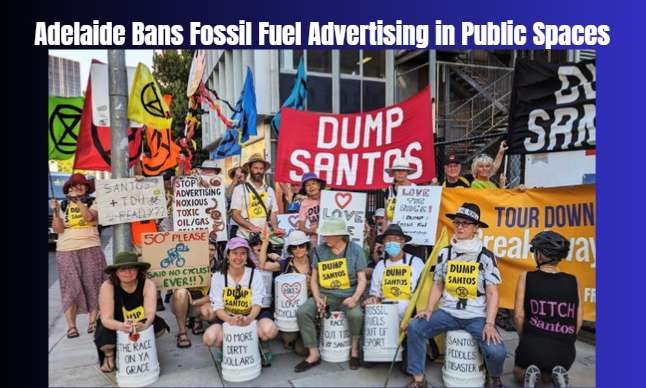
A new Adelaide City Council policy banning oil, coal and gas advertising has sparked a dispute over climate action and the future of the Santos-sponsored Tour Down Under village.
Adelaide City Council has approved a ban on advertising by oil, coal and gas companies in council-owned public spaces, triggering criticism from the South Australian government over the potential impact on major sporting events and local businesses.
The motion was introduced by Deputy Lord Mayor Keiran Snape and passed at a council meeting on Tuesday evening, with five councillors voting in favour and four against. The ban will apply to advertising in public locations such as bus stops, banners and billboards owned by the council. It is scheduled to take effect on 1 July 2027, with a transition period for existing advertising arrangements still to be determined.
Supporters say the policy is intended to align public advertising with the council’s climate commitments. Adelaide declared a climate emergency in 2019, and the council has set a target of halving its 2020 carbon emissions by 2030.
Snape argued that local government has a responsibility to address climate change and should ensure its public spaces do not promote industries associated with fossil fuels. He said the policy reflected the need for consistency between climate commitments and commercial decisions.
However, the South Australian government warned that the ban could affect the Tour Down Under, one of the country’s major cycling events. Gas company Santos sponsors the race, which brings professional cyclists, spectators and visitors to Adelaide each January.
A state government spokesperson said preventing the event’s naming-rights sponsor from advertising on council property could jeopardise the Tour Village in Victoria Square. The village attracts visitors and provides an opportunity for businesses in the central business district to benefit from increased foot traffic.
The government pointed to the more than 70,000 visitors attracted to the village during this year’s event and warned that changes to sponsorship arrangements could have wider economic consequences. The dispute has therefore expanded beyond advertising policy to include tourism, business activity and the relationship between climate objectives and major sporting sponsorships.
Adelaide Lord Mayor Jane Lomax-Smith also expressed concern about the financial consequences of restricting sponsorship opportunities. She said securing major sponsors was difficult and warned that losing corporate support could affect events held in the city.
Other councillors opposed the ban on economic and legal grounds. Councillor Alfredo Cabada argued that excluding large companies from public advertising could conflict with the council’s goal of growing Adelaide’s economy and potentially expose the council to legal challenges.
The debate also touches on the role of fossil fuel companies in Australia’s energy transition. Supporters of advertising restrictions argue that public institutions should reconsider partnerships with industries whose products contribute to greenhouse gas emissions. Opponents argue that sponsorship can support major events and that engagement with companies may be more productive than excluding them.
The policy is not due to take effect immediately, giving the council time to work through existing agreements and implementation details.It had contacted Santos and the Tour Down Under for comment.
The decision places Adelaide at the centre of a wider debate about climate policy, corporate sponsorship and the use of public spaces. Its eventual impact will depend on how the council implements the ban and whether alternative sponsorship arrangements can protect major events and local businesses while meeting the city’s environmental objectives.
CouncilAdvertisingAdelaideClimateMajor
Adelaide City Council has approved a ban on advertising by oil, coal and gas companies in council-owned public spaces, triggering criticism from the South Australian government over the potential impact on major sporting events and local businesses.
The motion was introduced by Deputy Lord Mayor Keiran Snape and passed at a council meeting on Tuesday evening, with five councillors voting in favour and four against. The ban will apply to advertising in public locations such as bus stops, banners and billboards owned by the council. It is scheduled to take effect on 1 July 2027, with a transition period for existing advertising arrangements still to be determined.
Supporters say the policy is intended to align public advertising with the council’s climate commitments. Adelaide declared a climate emergency in 2019, and the council has set a target of halving its 2020 carbon emissions by 2030.
Snape argued that local government has a responsibility to address climate change and should ensure its public spaces do not promote industries associated with fossil fuels. He said the policy reflected the need for consistency between climate commitments and commercial decisions.
However, the South Australian government warned that the ban could affect the Tour Down Under, one of the country’s major cycling events. Gas company Santos sponsors the race, which brings professional cyclists, spectators and visitors to Adelaide each January.
A state government spokesperson said preventing the event’s naming-rights sponsor from advertising on council property could jeopardise the Tour Village in Victoria Square. The village attracts visitors and provides an opportunity for businesses in the central business district to benefit from increased foot traffic.
The government pointed to the more than 70,000 visitors attracted to the village during this year’s event and warned that changes to sponsorship arrangements could have wider economic consequences. The dispute has therefore expanded beyond advertising policy to include tourism, business activity and the relationship between climate objectives and major sporting sponsorships.
Adelaide Lord Mayor Jane Lomax-Smith also expressed concern about the financial consequences of restricting sponsorship opportunities. She said securing major sponsors was difficult and warned that losing corporate support could affect events held in the city.
Other councillors opposed the ban on economic and legal grounds. Councillor Alfredo Cabada argued that excluding large companies from public advertising could conflict with the council’s goal of growing Adelaide’s economy and potentially expose the council to legal challenges.
The debate also touches on the role of fossil fuel companies in Australia’s energy transition. Supporters of advertising restrictions argue that public institutions should reconsider partnerships with industries whose products contribute to greenhouse gas emissions. Opponents argue that sponsorship can support major events and that engagement with companies may be more productive than excluding them.
The policy is not due to take effect immediately, giving the council time to work through existing agreements and implementation details.It had contacted Santos and the Tour Down Under for comment.
The decision places Adelaide at the centre of a wider debate about climate policy, corporate sponsorship and the use of public spaces. Its eventual impact will depend on how the council implements the ban and whether alternative sponsorship arrangements can protect major events and local businesses while meeting the city’s environmental objectives.
A nationwide survey of 4,000 Australians reveals declining confidence in politicians, growing dissatisfaction with democracy and significant differences...
New figures reveal more than $3 million in government spending on promotional merchandise, including unusual items such as condoms and lollies, raising...
Australia's antisemitism envoy has recommended stronger protest rules, additional visa checks and independent oversight of public broadcasters as part o...
Young residents, Indigenous advocates and farmers are raising concerns about proposed mining and gas extraction projects, warning that decisions made to...
Residents have rallied against a proposed 1,200-megawatt artificial intelligence data centre near Tungkillo, raising concerns about water supplies, land...
South Australian health authorities report 22 meningococcal disease cases this year and urge eligible residents to receive vaccination as contact tracin...
South Australian detectives have arrested a second man over a series of alleged business break-ins, thefts and property damage incidents across metropol...
South Australian police are investigating a fatal shooting in Firle after officers responding to reports of a woman allegedly armed with an axe opened f...
Eight people have died in separate road crashes across Victoria during the Melbourne Cup long weekend, with four of the fatal incidents involving motorc...
A fisherman escaped unharmed after a large crocodile climbed onto his boat while he was fishing alone on the Mary River, prompting renewed safety warnin...
New South Wales has begun accepting firearms under the national gun buyback scheme, but limited appointment availability has created an early challenge...
The new laboratory in Bundaberg will allow Indigenous rangers and traditional owner groups to test water locally, strengthening environmental management...