Australia Faces Banana Shortage as Cool Queensland Weather Hits Supply
By Chloe · Published 20 Oct 2026 · Updated 20 Oct 2026
Brisbane, QLD · Queensland News
Safety note: Admin approval is an initial review, not a guarantee that every detail is correct. Check important or urgent claims with official sources and report anything inaccurate or unsafe.
Source and credit: Contributor's own report
Australia Faces Banana Shortage as Cool Queensland Weather Hits Supply - Brisbane, QLD
Smart summary
Unseasonably cool weather is affecting banana production in Queensland, leaving supermarket shelves with reduced supplies and raising concerns about availability across Australia.
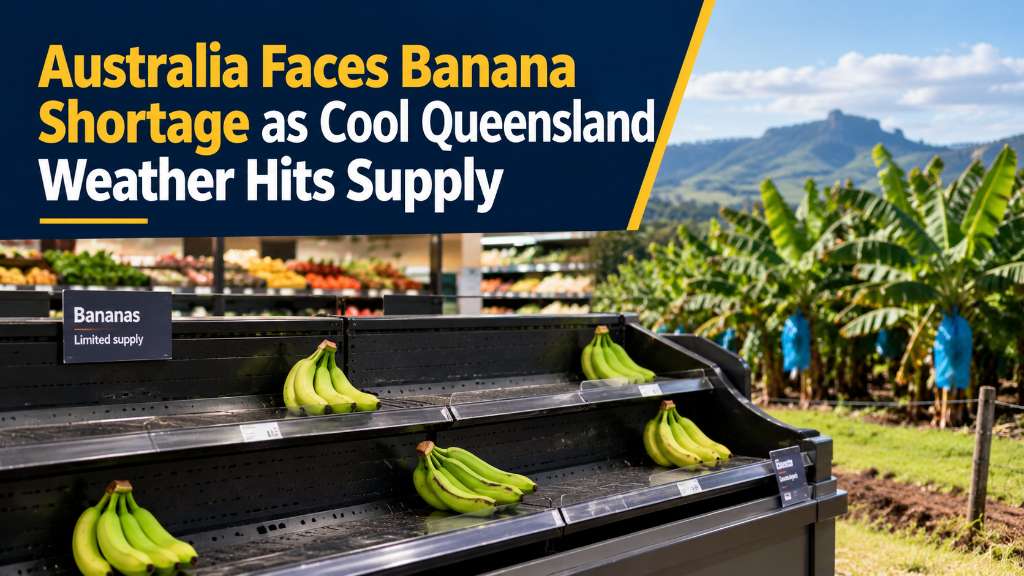
Australia is experiencing a shortage of bananas after cooler-than-usual weather in Queensland affected the growth and production of the popular fruit. The supply disruption is being felt in supermarkets, where shoppers have reportedly encountered sparse displays and bananas that remain green for longer than expected. The development has drawn attention to the importance of Queensland’s banana-growing regions in supplying fresh produce to Australian households.
Queensland is a major centre of banana production in Australia. Its tropical and subtropical growing regions provide much of the country’s domestic banana supply, making weather conditions particularly important for growers, distributors and retailers. When temperatures are lower than expected, banana plants can grow more slowly, delaying the development and harvesting of fruit. These changes can affect how much produce reaches packing facilities and supermarket distribution networks.
The current shortage has been linked to unseasonably cool conditions that have hindered banana growth. When harvesting volumes fall, retailers may have fewer bananas available to display, and the fruit that does reach stores may not be ready for immediate consumption. This can make shopping less predictable for consumers who regularly purchase bananas for breakfast, school lunches, snacks and cooking.
Major supermarket chains, including Coles, Woolworths and Aldi, have reportedly experienced limited banana availability or displays containing predominantly green fruit. Green bananas are not necessarily damaged or unsafe; they are often harvested before ripening and continue to mature during transportation and storage. However, when supplies are already constrained, shoppers may have fewer ripe bananas to choose from on any given day.
The supply disruption also highlights the challenges faced by banana growers. Fruit production depends on suitable temperatures, rainfall, plant health and the timing of harvesting. Unexpected weather can disrupt established growing schedules and make it harder for farmers to deliver consistent volumes. Even when conditions improve, it may take time for production and supermarket availability to return to normal because banana plants require time to develop new fruit.
For retailers, a reduction in supply can complicate stock management. Supermarkets must balance the limited quantities arriving from growers with demand from customers across different regions. Distribution networks may need to adjust deliveries, while stores may have to manage empty shelves or offer fewer ripe bananas than usual. The scale of the impact can vary between locations depending on deliveries and local stock levels.
Consumers can respond by checking fruit availability at different stores and allowing green bananas time to ripen at room temperature. Placing bananas in a paper bag can help speed ripening, although the result depends on the fruit’s maturity. Other seasonal fruits can also provide alternatives while supplies remain limited.
The situation serves as a reminder that everyday grocery products can be affected by changes in growing conditions, even when they are produced domestically. Australia’s reliance on regional agricultural supply chains means that weather in one major growing area can have consequences for shoppers far beyond the farms themselves.
As the situation develops, the key factors to watch will be whether Queensland growing conditions improve, harvesting volumes recover and supermarket deliveries become more consistent. No confirmed nationwide recovery date or verified price increase was established in the report available for this story.
BananasBananaFruitSupplyConditions
Australia is experiencing a shortage of bananas after cooler-than-usual weather in Queensland affected the growth and production of the popular fruit. The supply disruption is being felt in supermarkets, where shoppers have reportedly encountered sparse displays and bananas that remain green for longer than expected. The development has drawn attention to the importance of Queensland’s banana-growing regions in supplying fresh produce to Australian households.
Queensland is a major centre of banana production in Australia. Its tropical and subtropical growing regions provide much of the country’s domestic banana supply, making weather conditions particularly important for growers, distributors and retailers. When temperatures are lower than expected, banana plants can grow more slowly, delaying the development and harvesting of fruit. These changes can affect how much produce reaches packing facilities and supermarket distribution networks.
The current shortage has been linked to unseasonably cool conditions that have hindered banana growth. When harvesting volumes fall, retailers may have fewer bananas available to display, and the fruit that does reach stores may not be ready for immediate consumption. This can make shopping less predictable for consumers who regularly purchase bananas for breakfast, school lunches, snacks and cooking.
Major supermarket chains, including Coles, Woolworths and Aldi, have reportedly experienced limited banana availability or displays containing predominantly green fruit. Green bananas are not necessarily damaged or unsafe; they are often harvested before ripening and continue to mature during transportation and storage. However, when supplies are already constrained, shoppers may have fewer ripe bananas to choose from on any given day.
The supply disruption also highlights the challenges faced by banana growers. Fruit production depends on suitable temperatures, rainfall, plant health and the timing of harvesting. Unexpected weather can disrupt established growing schedules and make it harder for farmers to deliver consistent volumes. Even when conditions improve, it may take time for production and supermarket availability to return to normal because banana plants require time to develop new fruit.
For retailers, a reduction in supply can complicate stock management. Supermarkets must balance the limited quantities arriving from growers with demand from customers across different regions. Distribution networks may need to adjust deliveries, while stores may have to manage empty shelves or offer fewer ripe bananas than usual. The scale of the impact can vary between locations depending on deliveries and local stock levels.
Consumers can respond by checking fruit availability at different stores and allowing green bananas time to ripen at room temperature. Placing bananas in a paper bag can help speed ripening, although the result depends on the fruit’s maturity. Other seasonal fruits can also provide alternatives while supplies remain limited.
The situation serves as a reminder that everyday grocery products can be affected by changes in growing conditions, even when they are produced domestically. Australia’s reliance on regional agricultural supply chains means that weather in one major growing area can have consequences for shoppers far beyond the farms themselves.
As the situation develops, the key factors to watch will be whether Queensland growing conditions improve, harvesting volumes recover and supermarket deliveries become more consistent. No confirmed nationwide recovery date or verified price increase was established in the report available for this story.
National Australia Bank announces plans to reduce its workforce by approximately 2,500 positions by mid-2027, citing rising competition, operating costs...
Questions are growing over the collapse of the Whyalla steelworks, as the billionaire-backed company involved rejects responsibility for the facility’s...
Australia has designated an offshore geological formation near its northern coast for a major carbon capture and storage project proposed by Japanese en...
Australian motorists face continued pressure as insurance costs rise faster than inflation, prompting calls for fairer pricing and greater transparency.
Queensland police are investigating the death of a 48-year-old man whose body was found in bushland near the location where two dogs seriously injured a...
An Australian Defence Force member has been identified as a person of interest after a recording device was discovered aboard a Navy vessel docked in Ca...
South East Queensland faces a prolonged period of heavy rainfall, with Brisbane, the Gold Coast and the Sunshine Coast warned of potentially significant...
A 53-year-old man has been charged after an alleged domestic disturbance escalated into a fire and confrontation with police on the Gold Coast. Three of...
Adelaide is facing the loss of Oz Asia, one of Australia's leading Asian arts festivals, raising questions about the future of major cultural events and...
A 40-year-old cyclist has died after being struck by an unidentified vehicle on North Lake Road in Bibra Lake early Tuesday morning. The driver failed t...
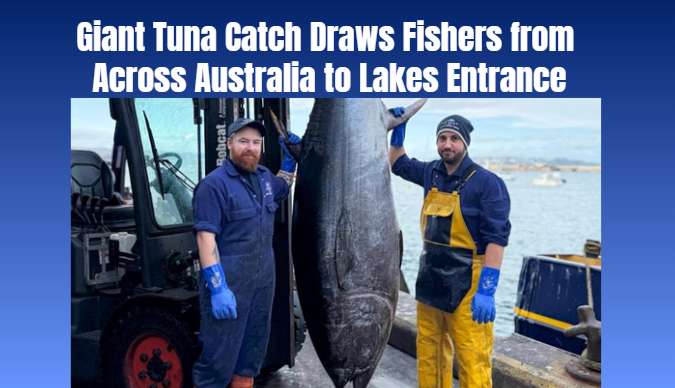
A 231-kilogram tuna caught by a five-person fishing team has helped turn Lakes Entrance into a major fishing destination, attracting anglers from across...
A new Australian Human Rights Commission report calls for stronger workplace protections after workers reported losing jobs, shifts and promotion opport...